
Navigating the world of safety certifications can feel overwhelming for any project manager or homeowner. When you are selecting lighting for your space, you want to ensure that every product meets rigorous safety standards. Understanding the nuances of ETL vs UL is the first step toward making an informed decision for your home or business.
Both organizations are independent testing agencies that verify products against the same safety benchmarks. We believe that safety should never be a guessing game. By clarifying the relationship between these two marks, we help you focus on creating beautiful, safe environments with total confidence.
Whether you are renovating a kitchen or upgrading an office, knowing that your equipment is certified provides peace of mind. Let us simplify these technical concepts so you can move forward with your project easily.
Punti di forza
- Both agencies test products to the same established safety standards.
- The marks indicate that a product has passed rigorous third-party testing.
- Choosing certified products ensures compliance with local building codes.
- There is no functional difference in safety quality between these two marks.
- Prioritizing certified lighting protects your property and provides long-term reliability.
Understanding the Role of Safety Certification in Lighting
We believe that true innovation in lighting starts with a foundation of rigorous electrical safety. When you select fixtures for your home or business, safety certification acts as a vital guarantee that your products have undergone professional evaluation.
These certifications ensure that every component meets strict benchmarks for fire resistance and performance. By prioritizing these standards, we protect your property and ensure long-term reliability in every installation. Choosing certified equipment is a proactive step toward creating a safer and more efficient environment for everyone.
It is easy to overlook the technical details when focusing on design, but the risks of uncertified products are real. Third-party verification provides the peace of mind that your lighting system will not fail under pressure. We encourage you to look for these marks to ensure your space remains both beautiful and secure.
| Caratteristica | Certified Lighting | Uncertified Lighting |
|---|---|---|
| Electrical Safety | High (Tested) | Unknown (Risky) |
| Fire Resistance | Standard verificati | No Guarantee |
| Long-term Reliability | Elevata durabilità | Frequent Failures |
| Insurance Compliance | Supporto completo | Often Denied |
In definitiva, safety certification is about more than just compliance; it is about the care we put into your projects. By choosing products that meet global electrical safety requirements, you are investing in a future that is both bright and worry-free.
The History and Significance of Underwriters Laboratories (UL)
When we talk about reliable standard di illuminazione, the history of Underwriters Laboratories is impossible to ignore. Founded over a century ago, this organization began as a small non-profit dedicated to testing new technologies. By 2012, it transitioned into a for-profit corporation, yet its core mission of promoting electrical safety has remained unchanged throughout its long journey.
The Evolution of UL Standards
The world of technology moves fast, and safety protocols must keep pace. Over the decades, the organization has continuously updated its rigorous testing methods to address modern innovations. These evolving standard di illuminazione ensure that every product meets the highest levels of protection against fire and shock hazards.
We believe that this commitment to constant improvement is what keeps the industry moving forward. By adapting to new materials and smart technologies, the organization provides a framework that manufacturers can trust. This proactive approach is essential for maintaining electrical safety in an increasingly complex digital world.
Why UL Certification is a Global Benchmark
Being UL Listed is widely considered the gold standard for product verification. As a recognized NRTL (Nationally Recognized Testing Laboratory), the organization holds the authority to certify that products meet specific safety requirements. This designation provides peace of mind to both homeowners and commercial project managers.
The global reach of this certification means that a product carrying the mark has undergone extensive evaluation. Whether you are working on a small residential upgrade or a large-scale installation, choosing certified solutions simplifies your compliance process. We prioritize these marks because they represent a proven commitment to quality and user protection.
The Rise of Intertek and the ETL Mark
We often see the ETL Listed mark on high-quality lighting products, but what does this certification actually mean for your projects? As the industry evolves, Intertek has established itself as a major force in the testing landscape. By providing a reliable and rigorous alternative for manufacturers, they ensure that safety remains at the forefront of innovation.
How ETL Testing Compares to Traditional Methods
Many people assume that different certification marks imply different levels of safety. In reality, rigorous product testing is the standard across the board. ETL is a division of Intertek that performs testing to the exact same safety standards published by other recognized laboratories.
This means that when you choose a product with this mark, you are receiving the same level of third-party verification as any other traditional method. We prioritize this consistency because it simplifies the selection process for our clients while maintaining high safety benchmarks.
The Legal Standing of ETL in the Marketplace
The ETL mark holds the same legal standing as any other mark issued by a Nationally Recognized Testing Laboratory (NRTL). Authorities Having Jurisdiction (AHJ) across the globe recognize this certification as proof of compliance with essential safety codes.
Whether you are working on a commercial installation or a residential upgrade, you can trust that these products meet all necessary requirements. The following table highlights why this certification is a smart choice for your next project:
| Caratteristica | ETL Certification | Industry Standard |
|---|---|---|
| Testing Rigor | High (NRTL Standards) | High (NRTL Standards) |
| Legal Acceptance | Fully Recognized | Fully Recognized |
| Market Presence | Global Leader | Global Leader |
| Compliance | Verified | Verified |
Breaking Down the ETL vs UL Comparison

Navigare nel mondo di safety marks can feel complex, but the truth about ETL vs UL is quite simple. Many people mistakenly believe one mark is superior to the other, yet both organizations operate under the same rigorous safety mandates. Whether a product carries a UL or ETL label, it has successfully passed the exact same high-level safety evaluations.
Testing Procedures and Laboratory Requirements
When it comes to product testing, there is no functional difference between these two entities. Both are recognized as Nationally Recognized Testing Laboratories (NRTLs) by OSHA. This means they must adhere to the same technical standards and testing protocols to ensure consumer safety.
“Safety certification is not about the brand on the label, but the integrity of the testing process that ensures every light fixture performs reliably in your space.”
Because they follow identical safety criteria, you can trust that any certified product meets the necessary requirements for your installation. We prioritize this transparency to provide you with a wider range of high-quality, compliant lighting options.
The Certification Process for Manufacturers
The path to becoming UL Listed or obtaining an equivalent certification involves a series of strict steps. Manufacturers must submit their designs for thorough examination, which includes:
- Initial design review and documentation analysis.
- Physical testing of prototypes under extreme conditions.
- Ongoing factory inspections to ensure consistent production quality.
This process ensures that the safety standards are maintained from the factory floor to your final installation. We work closely with manufacturers who value this level of rigor, ensuring that your projects remain safe and efficient.
Acceptance by Authorities Having Jurisdiction (AHJ)
If you are worried about whether your local inspector will accept an ETL Listed product, you can rest easy. Authorities Having Jurisdiction (AHJ) are required to treat these marks with equal weight. Since both marks signify compliance with the same national safety standards, they are universally accepted in building codes across the country.
Choosing between these marks is often a matter of preference or availability rather than safety. We are here to help you navigate these choices, ensuring your lighting solutions are both innovative and fully compliant with all local regulations.
Why Safety Certification Matters for French Lighting Projects
When you embark on a lighting installation in France, navigating the complex landscape of safety certification is essential for project success. We understand that balancing aesthetic goals with strict technical requirements can be challenging. Our team is dedicated to guiding you through these hurdles to ensure your installations are both beautiful and fully compliant.
Navigating International Standards and Local Compliance
France maintains rigorous standard di illuminazione that protect both public and private spaces. Adhering to these rules is not merely a suggestion; it is a fundamental requirement for any professional installation. We help you bridge the gap between global manufacturing benchmarks and specific French building codes.
To maintain conformità normativa, we focus on several key areas during the planning phase:
- Verifying that all components meet European CE marking requirements.
- Ensuring compatibility with local electrical infrastructure and voltage standards.
- Documenting all technical specifications to satisfy local building inspectors.
The Importance of Third-Party Verification for Consumer Trust
Beyond the legal necessity, third-party verification serves as a powerful tool for building long-term consumer trust. When a product carries an independent certification, it signals to your clients that safety is never compromised. This level of transparency is vital in today’s market, where quality and reliability are highly valued.
Noi crediamo che proactive compliance is the best way to mitigate risk and protect your reputation. By choosing certified solutions, you provide peace of mind to end-users while ensuring your project stands the test of time. Our commitment to these high standards ensures that every lighting solution we deliver meets the highest expectations for safety and performance.
Common Misconceptions About Lighting Safety Marks
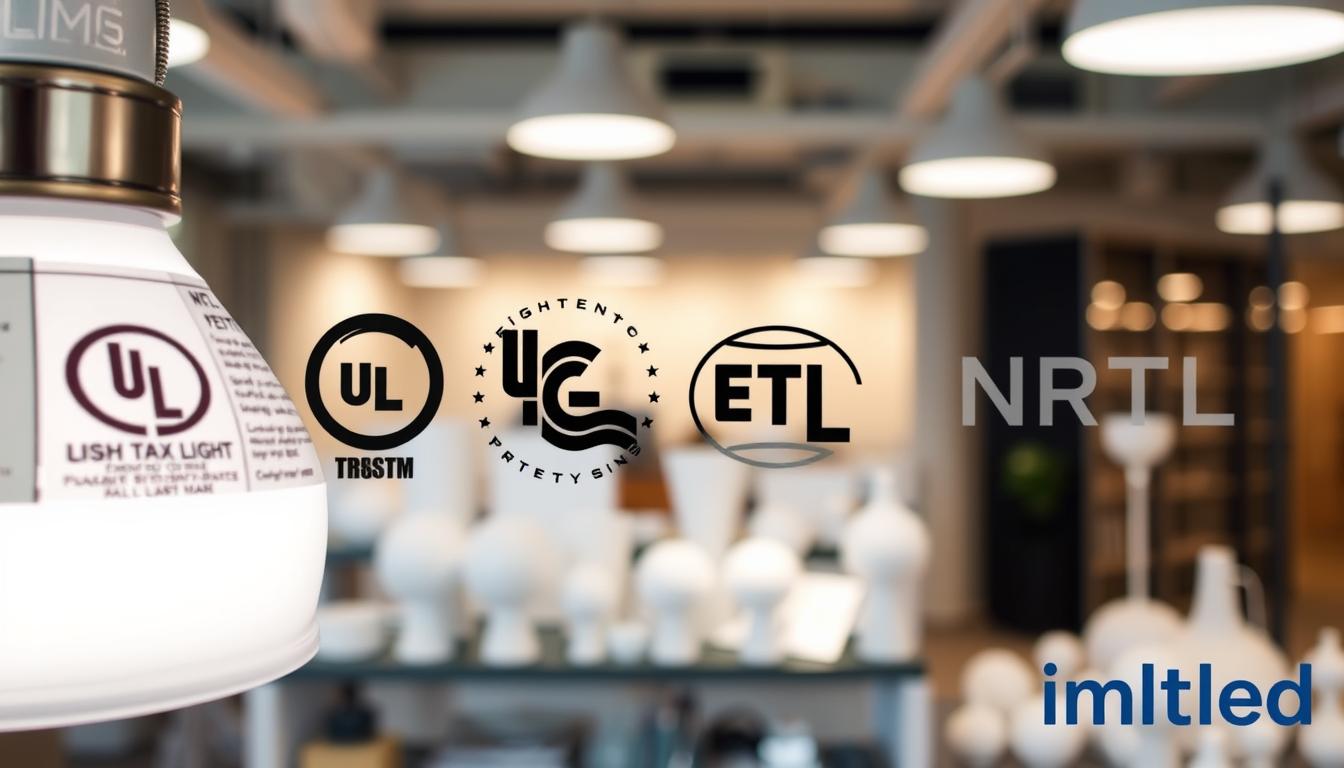
It is time to clear up the confusion surrounding the many safety marks found on modern lighting products. Many buyers assume that certain labels offer better protection than others, but this is often a misunderstanding of how the industry functions. We want to help you feel confident in your choices by separating fact from fiction.
Debunking the Myth of Superiority
A common belief is that one specific certification mark is inherently better or more rigorous than another. In reality, if a product carries a mark from a recognized testing body, it has met the same high standards for safety and performance. Quality is not defined by the logo on the box, but by the rigorous testing process the product has successfully completed.
To help you navigate these choices, consider these common myths we often encounter:
- Myth: One mark is legally required over another.
- Myth: A specific brand of mark guarantees a longer product lifespan.
- Myth: Only one type of laboratory is capable of testing lighting equipment.
Understanding the NRTL Designation
The true indicator of a laboratory’s capability is the NRTL designation. An NRTL, or Nationally Recognized Testing Laboratory, is an organization that the Occupational Safety and Health Administration (OSHA) has qualified to perform safety testing. When you see this designation, you know the facility meets strict government requirements for technical competence.
Questo safety certification ensures that the testing procedures are consistent and reliable across the board. By focusing on the NRTL status rather than the specific brand of the mark, you can easily verify that your lighting solutions are safe for any installation. We encourage you to prioritize this designation to ensure your projects remain compliant and secure.
How to Verify Certification Marks on Lighting Products
We believe that peace of mind starts with verifying the authenticity of every safety marks you see on your lighting equipment. Protecting your investment is a top priority, and taking a few moments to confirm that a product is truly certified can save you from significant headaches later. By following a few simple steps, you can ensure that your installations meet the highest standards of quality and reliability.
Checking Online Databases for Authenticity
The most reliable way to confirm a product’s status is to visit the official online directories provided by the testing agencies. Both UL and Intertek maintain searchable databases where you can enter the manufacturer’s name or the specific file number found on the product label. Always verify that the information in the database matches the physical product you have in hand.
If a product claims to be certified but does not appear in these official registries, you should exercise extreme caution. These databases are updated in real-time, making them the gold standard for confirming that your safety marks are legitimate and currently active. Relying on these digital tools is a smart, efficient way to maintain the integrity of your lighting projects.
Identifying Counterfeit Labels and Fraudulent Claims
Unfortunately, not every label you see is genuine, and it is important to stay vigilant against counterfeit claims. A common red flag is a label that lacks a specific file number or appears blurry and poorly printed. Authentic certification labels are typically crisp, clear, and accompanied by a unique alphanumeric code that links directly to the manufacturer’s certification file.
We encourage you to look closely at the physical markings on the fixture or its packaging. If the safety marks look suspicious or if the manufacturer cannot provide documentation to support their claims, it is best to avoid that product entirely. Staying informed and proactive is the simplest way to ensure that your space remains safe, compliant, and beautifully lit.
The Impact of Certification on Insurance and Liability
Insurance premiums and liability claims are often tied directly to the safety certifications of your installed lighting. When you choose certified products, you are not just buying a fixture; you are securing your business against unforeseen accidents and legal complications. We prioritize these standards to ensure your peace of mind.
Mitigating Risks in Commercial Installations
In high-stakes environments, such as a professional kitchen, the stakes for safety are incredibly high. For instance, commercial kitchen ventilation systems must strictly adhere to NFPA 96 e UL 710 standards to prevent fire hazards. By utilizing certified illuminazione commerciale, you significantly reduce the risk of electrical failure that could lead to catastrophic property damage.
Proactive risk management involves verifying that every component meets rigorous testing protocols. This approach protects your staff and customers while maintaining the integrity of your facility. We help you navigate these technical requirements so that your operations remain safe and efficient.
Compliance Requirements for Building Codes
Meeting local building codes is a fundamental aspect of conformità normativa that no business owner should overlook. Authorities Having Jurisdiction (AHJ) often require proof of certification before granting occupancy permits or approving renovations. Failure to provide this documentation can lead to costly delays or even the forced removal of non-compliant equipment.
Manutenzione compliance ensures that your business stays on the right side of the law. It also simplifies the process of securing insurance coverage, as providers often offer better terms for facilities that demonstrate a commitment to safety. Our team focuses on providing solutions that meet these strict conformità normativa benchmarks effortlessly.
| Fattore | Certified Lighting | Non-Certified Lighting |
|---|---|---|
| Insurance Coverage | Easier to obtain/lower rates | Risk of claim denial |
| Building Code Status | Fully compliant | Potential for fines/removal |
| Liability Exposure | Significantly reduced | High legal risk |
| Operational Safety | High reliability | Increased fire/hazard risk |
Choosing the Right Lighting Partner for Your Needs
Your choice of a lighting partner defines the safety and longevity of your entire installation. We understand that you want more than just products; you need a reliable ally who prioritizes your peace of mind. Selecting a team that values integrity is the most important step in your journey toward a brighter space.
Evaluating Manufacturer Transparency
Transparency is the hallmark of a trustworthy manufacturer. You should always look for partners who openly share their documentation and certification records. When a company is honest about their processes, it shows they have nothing to hide regarding product quality.
A key indicator of this commitment is the consistent use of third-party testing. By relying on independent labs to verify safety claims, manufacturers prove they hold themselves to the highest standards. We believe that your confidence in our products starts with this level of radical openness.
Why Professional Guidance is Essential for Large-Scale Projects
Large-scale projects require a level of precision that goes beyond simple product selection. Navigating complex building codes and safety requirements can feel overwhelming without the right support. Professional guidance ensures that every component in your illuminazione commerciale setup is fully compliant and optimized for performance.
Corretto lighting installation is not just about aesthetics; it is about ensuring long-term safety and operational efficiency. Our team works closely with you to manage these technical details, allowing you to focus on your vision. We are dedicated to making your lighting dreams a reality by providing the expertise needed to navigate even the most demanding installations.
Connecting with Industry Experts for Compliance Support
We believe that achieving full compliance for your lighting projects should be a straightforward and stress-free experience. Navigating the technical landscape of safety marks can be complex, but having the right partner makes all the difference in your success.
Reaching Out for Technical Specifications
Our team is dedicated to providing the technical clarity you need to keep your projects on track. Whether you have specific questions about Intertek testing protocols or require detailed documentation for your installation, we are ready to assist you.
We prioritize transparency and precision in every interaction. By working closely with our experts, you ensure that your lighting solutions meet all necessary safety standards without unnecessary delays.
How to Contact IMLT LED for Certified Solutions
Getting in touch with us is simple and efficient. We have streamlined our communication channels to ensure you receive the support you need exactly when you need it.
Inquiries via Website and Email
For detailed technical requests or to learn more about our certified product range, please visit our website at www.imltled.com. You can also send your inquiries directly to our support team via email at [email protected]. We strive to respond to all messages promptly to keep your project timeline moving forward.
Direct Support via WhatsApp
If you prefer a more immediate conversation, we are available to chat through Bomba. Simply reach out to us at 0086 185 8848 3178 to discuss your project requirements in real-time. We are always here to help you navigate the path to successful, certified lighting installations.
Conclusione
Selecting between ETL and UL marks does not have to be a difficult decision. You now understand that both organizations provide equivalent safety assurance for your lighting projects. This knowledge empowers you to make smarter, more confident choices for every installation.
We believe that safety should never be a barrier to your creative vision. Our team remains available to support your journey toward safer and more innovative lighting solutions. Reach out to us to discuss your specific needs and technical requirements.
Your commitment to quality standards protects your property and ensures long-term reliability. We look forward to helping you illuminate your space with certified products that meet the highest industry benchmarks. Let us work together to bring your next project to life with precision and peace of mind.