Have a home theatre, but it’s too basic? Well-planned lighting can provide a professional theater vibe. For this, you need to have proper knowledge about the lighting techniques like ambient light, task light, and accent light.
However, no worries, in this guide, I will discuss the commonly used and suitable light fixtures for home theatre. Here you will also find a complete guideline on how to pick the right fixture and layout your theatre lighting. So let’s get started:
Hide
What Is Home Theatre Lighting?
Home theatre lighting refers to creating a comfortable viewing experience by combining different lighting techniques like ambient, task, and accent lighting. The purpose of such lighting is to create a suitable ambiance so that you can enjoy your movies to the fullest, sitting at home.
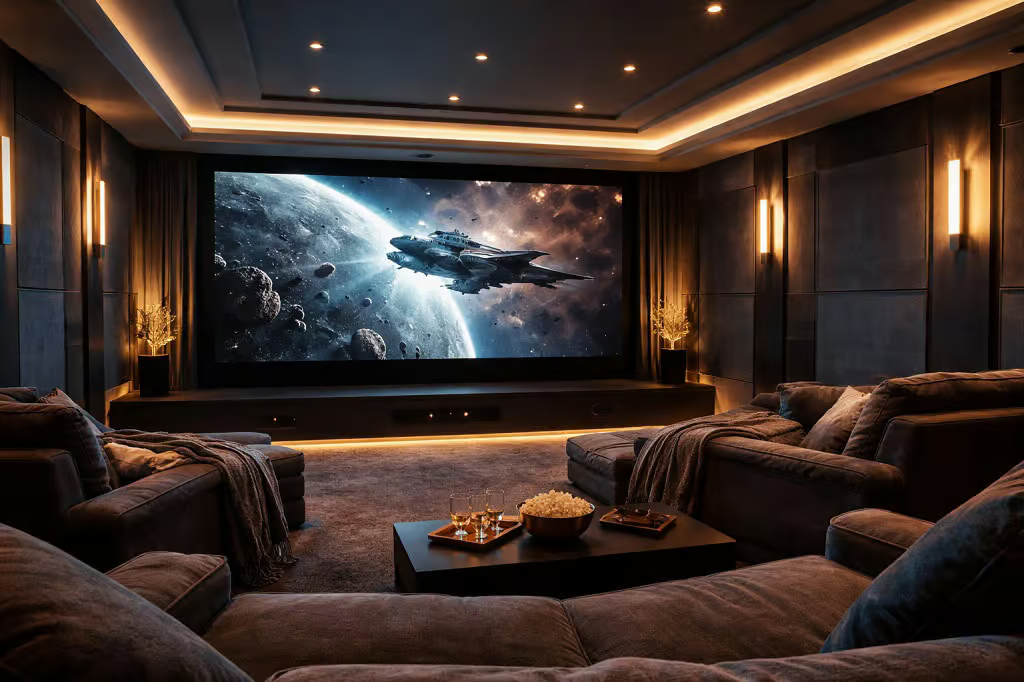
While setting up a home theater, you must give preference to minimizing glare as much as possible so that it causes negligible eyestain. To obtain this kind of comforting lighting, several techniques are applied; for example, backlighting the screen or TV. Moreover, the brightness of the light is kept minimal so that you can enjoy the movie time at a dimmed ambiance, just like a theatre or cinema hall.
Why Is Home Theater Lighting Important? – Benefits
Glare Minimization
The lighting of the theatre room has varying requirements from any other room in your house. While the light layout is kept, the position of the fixture is kept such that the screen faces no direct reflection, which can cause glare. Besides, diffused lights are used, which don’t directly fall on our eyes. In this case, cove lighting is ideal for general lighting of the room.
Eye Stain Reduction
Home theatre lighting deals with lighting techniques like bias lighting that reduce glare and eye strain. For instance, the backlighting of your LED display causes less eye strain. When you are watching the screen in a completely dark room, it creates stress on the eyes. So, bias or backlighting helps to reduce eye fatigue by creating a baseline.
Enhanced Experience
A well-planned theatre lighting creates a cozy cinema hall atmosphere right in your home. Thus, you can enjoy movies with your family, friends, or partner in full privacy in a desired and customizable atmosphere. Besides, high-tech lighting like addressable LED strips takes your movie experience to the next level.
Aesthetic Appeal
Using regular room lighting makes the theatre room look too basic. But by adopting proper theatre lighting, you can make this part of your house something to showcase to your guests. Even the simplest theatre setting can be given an extraordinary look just with proper light implementation.
Techniques/Types of Home Theater Lighting
For a complete home theatre lighting, you should focus on three lighting techniques; these are as follows:
Task Lighting
Task lighting focuses on functionality. For instance, you can add lights to the snack bar of your home theatre. This will help you see the food item clearly when the room is dark at movie time. This also applies to the stairs of the theatre, or the corner where you are involved in activities like reading.
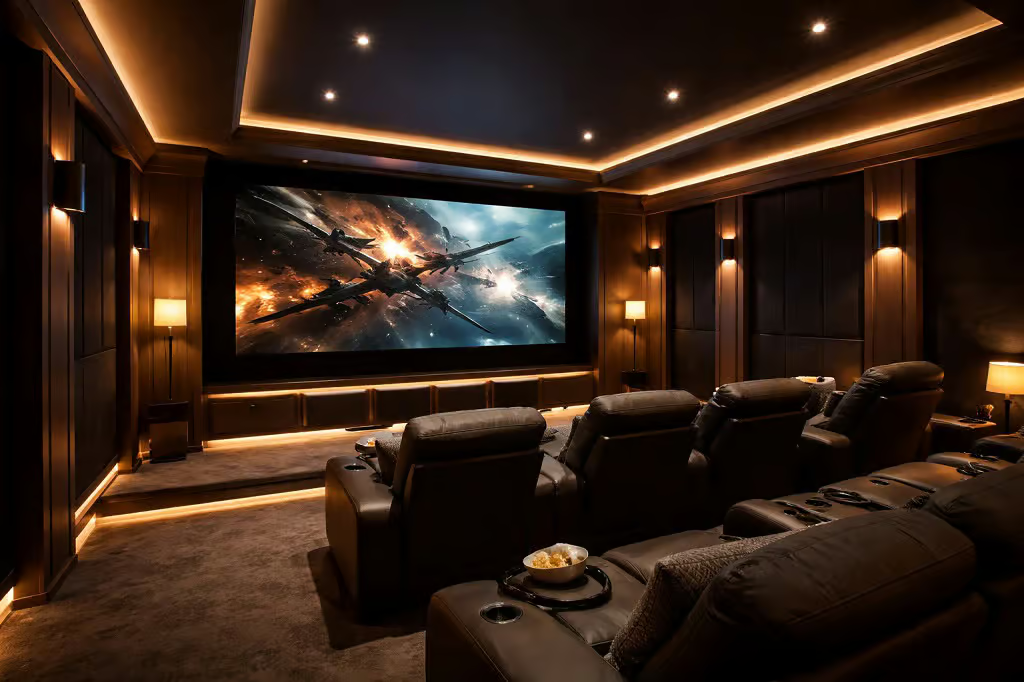
Below, I have added the most popular task lighting used in home theatre lighting:
- LED Strips
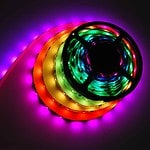
LED strip lights are the modern fixture that comes with a sleek outlook. They are bendable and can be angled to meet creative designs. You can use these strip lights for backlighting your TV/screen in the theater. This offers comfortable viewing, reducing glare.
- Adjustable Spotlights
Adjustable spotlights allow you to direct the fixture to a specific angle where you need the light to fall. Thus, you get a sort of control over the light direction, which you can adjust as per your comfort and requirements.
- Floor & Table Lamps
Floor lamps can be relocated and thus offer portable lighting to your theatre room. You can use the lamp in the corner of the theatre chair where you can read books. Besides, you can use table lamps on side tables or shelves if present in the room.
Accent Lighting
Accent lighting takes the ambiance of your theatre room to the next level. It highlights a specific zone of the room and thus beautifies the entire space.
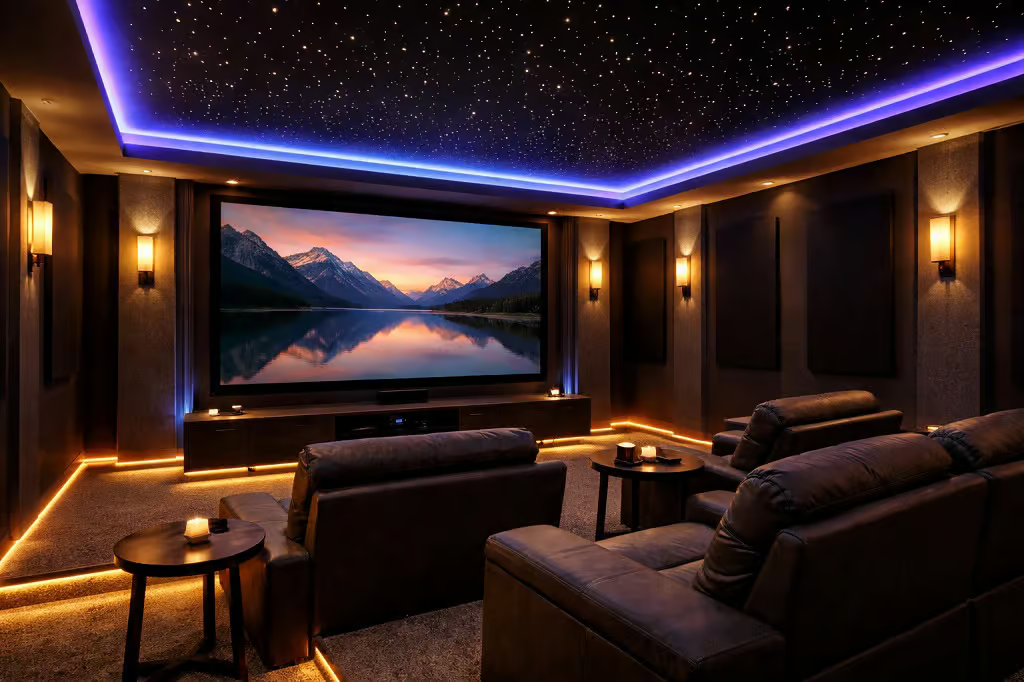
The common lighting used in a home theatre is as follows:
- LED Strips and Neon Flex
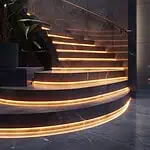
LED strip and LED neon flex are two popular light variants for accent lighting. You can bend these lights to different angles to highlight particular areas of the theatre. For instance, use the lights below the shelves, stair steps, and behind the TV/screen. Besides, you can install these lights beneath the seats to create a floating effect.
- Track Lighting
Track lights are flexible fixtures that allow you to change the lighting angle as per your wish. You can face the lights toward the wall or any specific corner to bring soft accent lighting throughout the room.
- Wall Sconces
Wall scroners are installed on the side walls of the theatre. Different designs are available; you can choose one to create a royal look, or a simple, sleek look- the decision is yours. However, a black or bronze finished fixture suits the theatre vibe best.
Besides, you must choose wall sconces facing upward or downward instead of direct-facing ones. This minimizes screen glare. And for better results, install these fixtures at least 6 feet high and 8-10 feet apart.
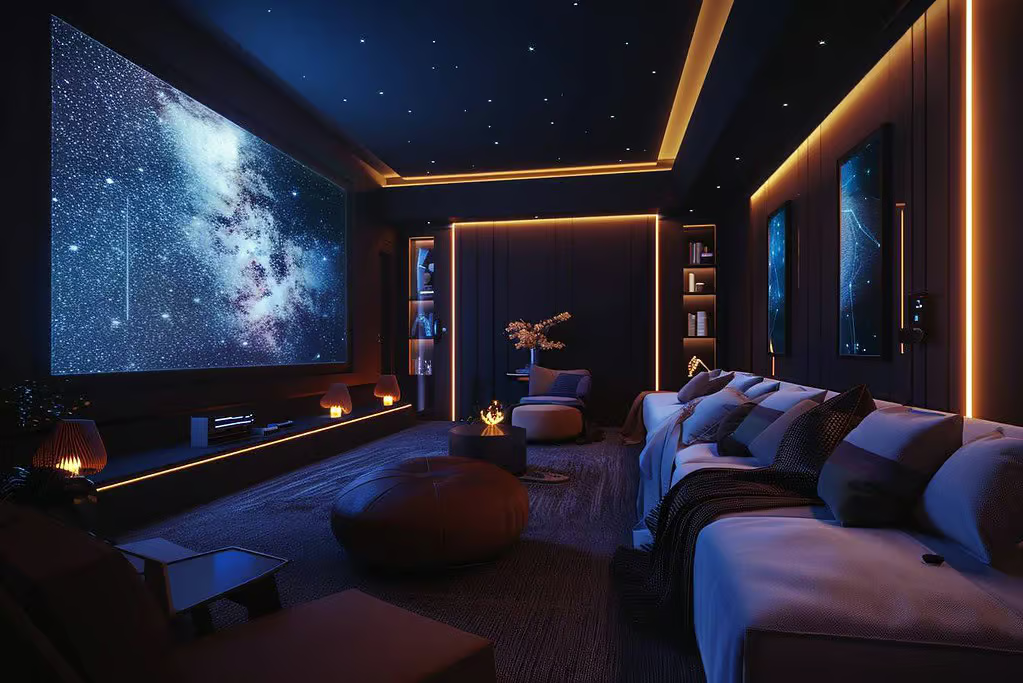
- Starlight Ceiling Panels
Starlight ceiling panels create a magical environment in your home theatre. These panels are installed on the ceiling to mimic a starry sky. Thus, you can enjoy your movie time feeling like sitting in the open sky and enjoying the starry view.
Ambient or General Lighting
Ambient lighting provides general lighting to the entire room for adequate visibility. These lights are mostly installed on the ceiling to illuminate the whole room. LED strip lights and recessed or pot lights are a popular option for general lighting. Besides, you can implement cove lighting for a stand-out ambiance. Just as in cinema halls, the lights are turned off when the movie starts, you can turn off the light and go for only the accent lights, a theatre-like feel at home.
8 Factors To Consider While Home Theater Lighting
Before you opt for home theatre lighting, here are the factors you must take into consideration:
1. Function of The Room
First, decide whether you are using the theatre room only for movies or have any other function. For instance, it can be a part of a common space of your house where you often read or hang out with family and friends. In that case, plan the lighting for multi-purpose use. The theatre room has different lighting needs than other spaces in your house. Therefore, you must analyze the function of the room and combine general, task, and accent lighting to get the best output.
2. Fixture Type
Different types of fixtures can be used in the theatre. This includes- LED strip, neon flex, recessed lights, spotlights, track lights, etc. Divide the room into small segments and decide which type of light will be best for each section. For example, use LED strip lights behind the screen as a backlight, under the shelves, and seats/chairs of the theatre. Again, go for recessed lights on the ceiling for general light. Besides, spotlights and tracklights can be used to highlight a specific zone of the room, such as the snack bar.
3. Brightness Level & Dimmable Features
The brightness level should be customizable for the ultimate enjoyment and functionality. For instance, when you are watching movies, create a dimmed environment with minimal lighting. Turn off the main lights and focus on accent lighting. Again, while cleaning the room, there should be 100% brightness for sufficient visibility and proper cleaning. Therefore, you must choose a dimmable light solution for the theatre room where you can adjust the brightness as per your needs.
Below, I’m adding the recommended brightness level for different functions in home theatre:
| Light Type | Brightness Level | |||
| Movie | Casual | Cleaning | Party/Gaming | |
| Main Lights | Off | 30% | 100% | 40% |
| Step Light | 10% | — | — | — |
| Accent Lights | — | 50% | — | — |
| Screen Backlight | 15% | 20% | Off | Color-Match |
| Seat Lights | 5% | Low | — | Pulsing |
4. CCT
‘Correlated Color Temperature’ or CCT defines the appearance of the white lights emitted from a light source. It is measured on the Kelvin scale. For theatre lighting, opt for warm lights ranging from 2700K to 3000K. This brings a yellowish white light, adding coziness to the ambiance where you can relax even when you are not watching movies.
5. CRI
CRI refers to ‘Color Rendering Index’. It determines how accurately the artificial light source mimics natural light or sunlight. The CRI rating ranges from 0 to 100; the higher the value better the color accuracy it offers. For home theater, choose lights with a CRI above 90. This will make your screen look more vibrant and give a natural appearance to the scenes.
6. Color Of The Room
Considering the room’s color is also important. Always choose dark colors like black, navy blue, grey, deep green, etc. for the theatre room. This minimizes the light reflection and aids in comfortable viewing of the screen, reducing light glare.
7. Light Placement
Wrong light placement in your theatre room can hamper the entire movie experience. So proper layout planning is a must. Remember, the placement of the fixtures should be such that it doesn’t reflect on the TV screen. Use soft lights; for wall lighting, use down or upward-facing acroners that diffuse and offer even lighting. Again, add bright lights on the steps for proper visibility while using the stairs (if present) in the dark. For professional light layout, consider the three lighting techniques- ambient, task, and accent lighting; and thus place the lights.
Step-by-Step Home Theater Lighting Plan
Step 1: Assessing Your Space & Room Measurement
First, measure the length, width, and height of the room to decide on the light layout. For effortless and well-planned light placement, a theatre room should have a length and width of at least 15 x 20 feet, and the height of the room should be a minimum of 8 feet to prevent shadow. Note down the measurement of your room, it will help you in light placement and determining how many fixtures you will need.
Step 2: Light Layout & Decide Fixture Types For Different Zones
Start with the general lighting of the room, with ceiling lighting. In this case, opt for cove lighting or install recessed lights on the ceiling. Besides, each seat needs specific task lights. Usually, a home theatre consists of 2-3 rows with 3-4 seats per row; you must focus on individual seat lighting. Apart from this, leave about 4ft of space between the rows for walking. You can also implement floor lighting for proper visibility while walking. Areas to install light include:
- Ceiling
- Walls
- Beneath the seats
- Armrests and cup holders of the seat
- Snack bar & shelves
- Steps of stairs
- Backlighting the screen
Mark the areas to light up and choose the suitable fixture types. Here is a short recommendation:
- LED Strip light for ceiling lighting, backlighting, underneath seat, shelves, and snack bar.
- Recessed lights for the ceiling, floor lighting
- Floor lamps for corner lighting
- Wall sconces for wall lighting
- Spotlight and track lights at specific spots
Step 3: Handle Natural Light
If you have windows in your room or there is any outer light source that gets into the room, blocking it is a must. The daylight from the window reflects the TV screen; as a result, you can’t enjoy the view. For this, you must use a blackout curtain during the day so light from the window doesn’t enter the room.
Step 4: Choose a Theme
Select a theme for your room theatre to pick the right fixture. If you opt for a classic look, go for wall sconces, spotlights, track lights, and recessed lights. And if you want to bring a modern and sleek look, incorporate LED strips into your light selection.
Besides, you can choose the light color and design based on your personality and the genre of movie you enjoy. For instance, if you like thrilling, adventurous movies or gaming, you can create a setup with addressable LED strips and neon lights. Again, if you are into the romantic genre, use soft, warm light hues.
Step 5: Decide the Controlling System
From a conventional switchboard, choose a smart controlling system for your theatre room to elevate the experience. You can choose a remote control system or a smartphone-based control option; details are as follows:
- Remote Control
For basic control, choose a standard RF or IR remote that has 6 to 8 buttons performing common actions. For the main lights, screen, and seat lights, program a one-touch control system. Thus, sitting in the chair, you can control the lighting of the entire room while watching movies. Usually, remote control of theatre quality ranges from $50 to $100, and they can handle up to 4 lighting zones.
- Smartphone Apps for Total Control
App control systems connect the lighting to your phone app via WiFi. Thus, you can get the status of all the lights directly on your phone and adjust the lighting accordingly. However, smartphone systems are more expensive than the remote control ones; this system requires a hub (that can cost between $80 and $ 200) and the free app. The most common apps used for light control are Lutron, Philips Hue, and Control.
Step 6: Lighting Budget
Always plan a draft for the lighting cost. Here I am adding a general price idea that will help you in budgeting:
| Item | Cost |
| Basic overhead lighting | $200-500 |
| Wall sconces | $50-150 each |
| Floor lighting | $100-300 |
| Smart controls | $200-600 |
| Installation costs | Usually, 20-30% of the equipment cost |
N.B.: Keep a buffer of 15% in your budget; this will help you cover any additional costs if needed.
Top 7 Mindblowing Home Theatre Lighting Ideas
1. Backlight The Screen With Addressable LED Strip Lights
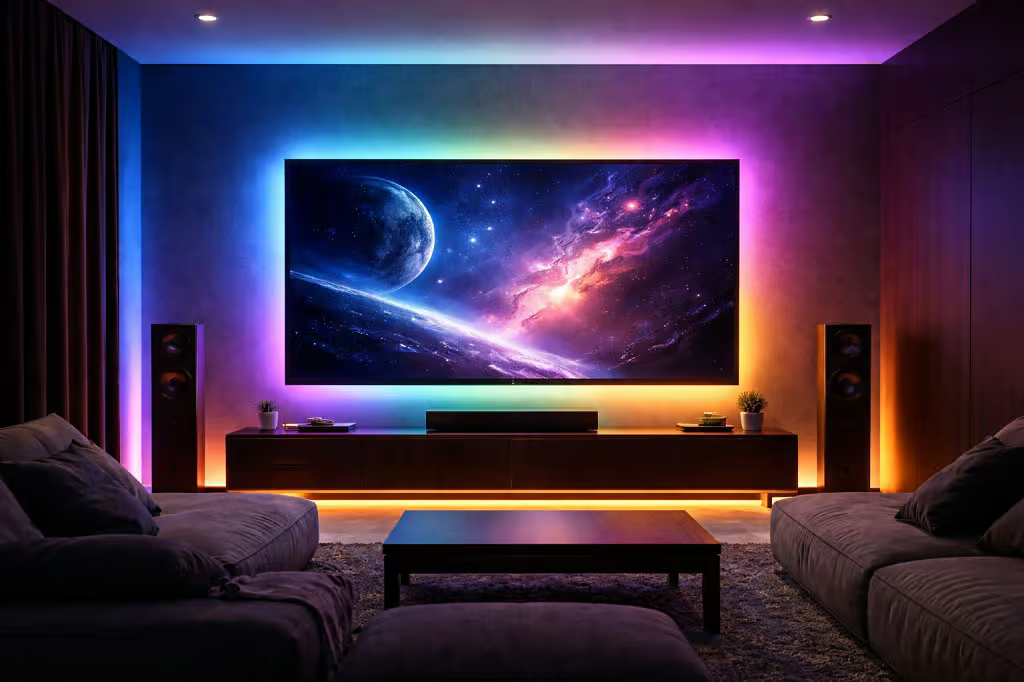
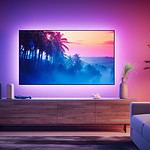
Backlighting the TV of your theatre not only beautifies the space but also minimizes eye strain. LED strip lights are the best approach for backlighting. However, instead of choosing single-color strips, opt for an addressable LED strip that syncs with sound and changes color with the TV screen. Thus, you can have a thrilling movie time experience sitting at home.
2. Create a Floating Effect With LED NED Neon Light
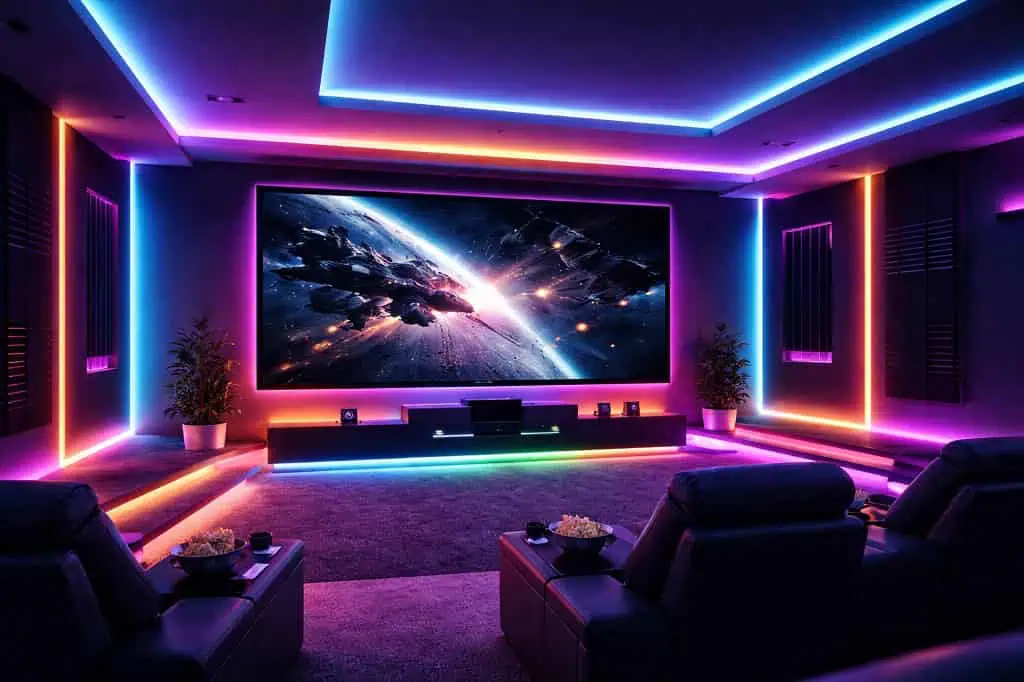
Want to bring a magical floating effect to your home theatre? Install LED strips under the seats and see the magic. The hidden lighting from beneath the seats gives a floating effect, making you feel like you are floating in the air. This further adds visibility to walk in the dark theatre room.
3. Theme or Color-Based Lighting
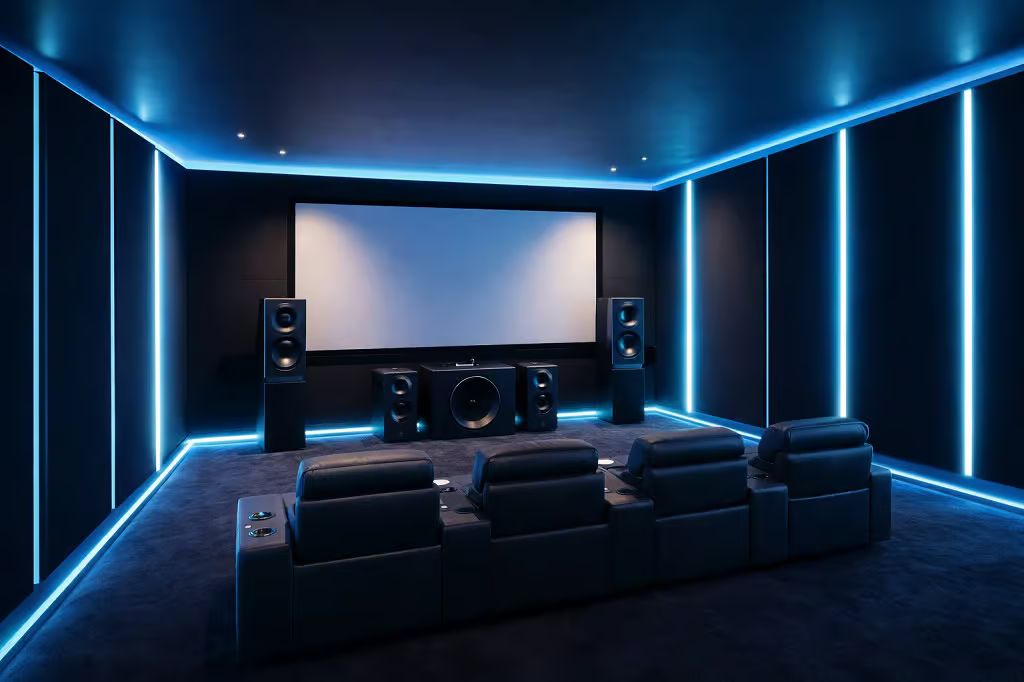
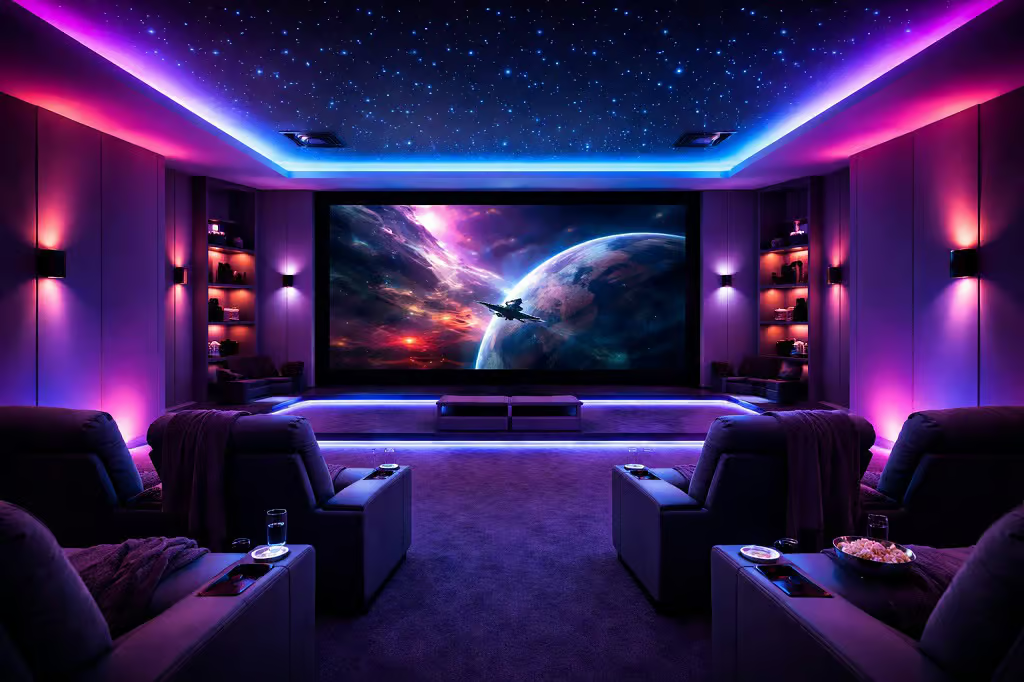
To make your home theatre more personalized, go for a specific theme or color and light up the entire theatre accordingly. Warm white colors are common for theatre; instead, choose a vibrant color. It can be blue, aqua, green, red, or any of your preferred colors. Use the same color for the ceiling, walls, and other areas, just as shown in the picture. Thus, you can get a color-specific personalized home theatre lighting,
4. Built a Starry Night Ceiling
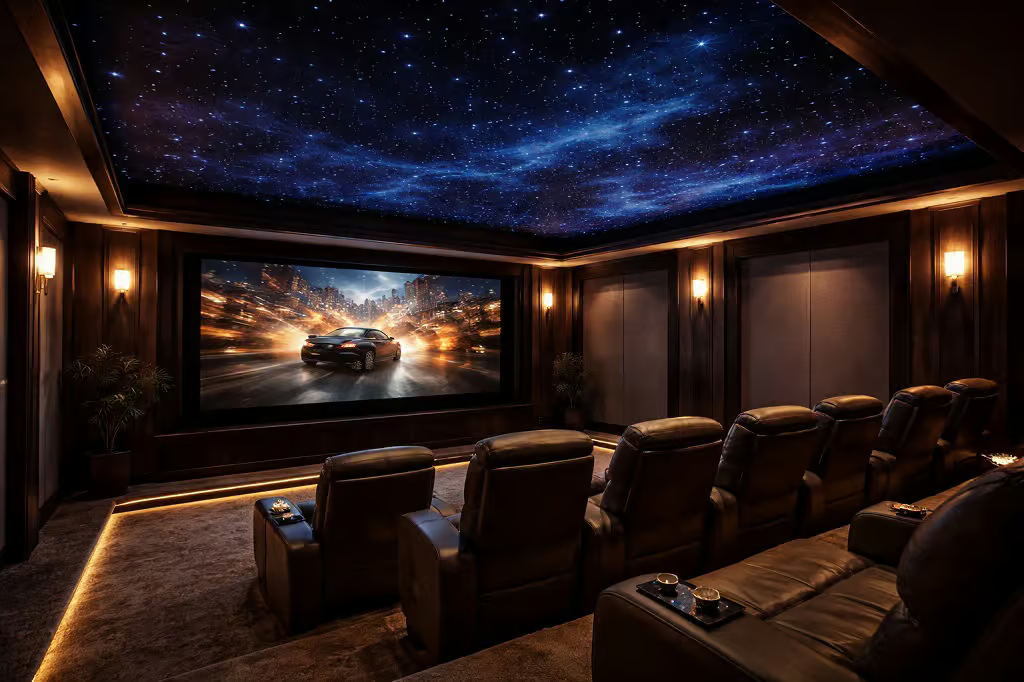
A starry night ceiling is a very popular and aesthetic lighting option when it comes to theater lighting. Here, fiber optic star ceiling panels are installed, which mimic a night sky full of stars. Whether it’s a romantic or a thrilling movie, such an ambiance will boost your experience many times.
5. Use Smart Lighting Solution
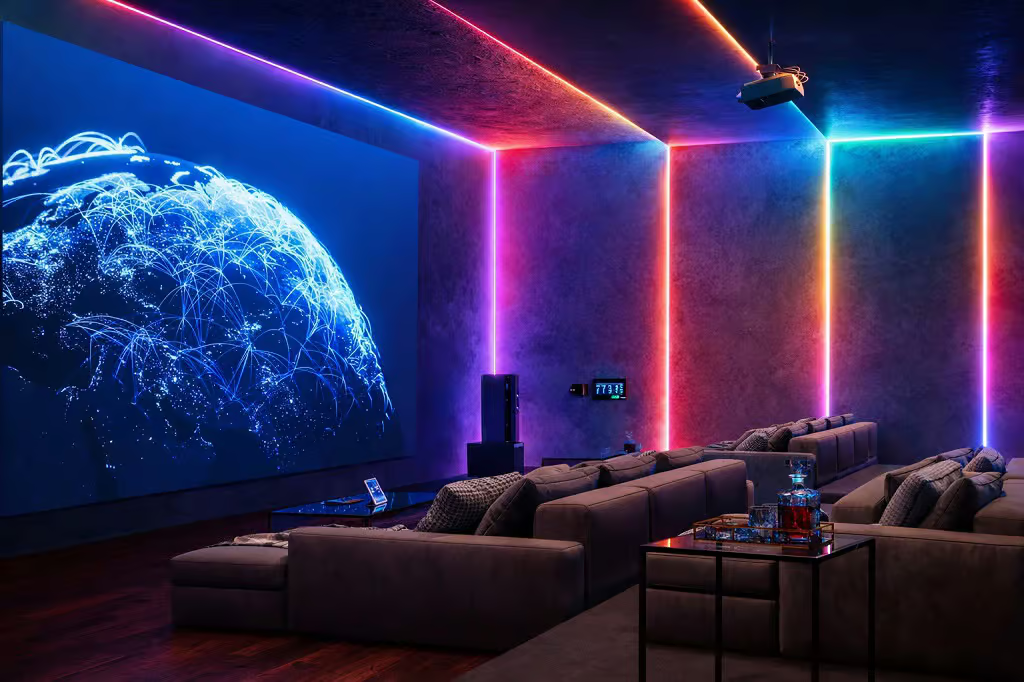
For the ultimate movie experience, opt for smart lighting solutions that offer advanced features like brightness control, voice command, an automated lighting system, and color-changing options. This allows customization and also makes the light control system easier. Besides, pause-activated lighting is another feature that you can consider. Having this system, the lights brighten up automatically when the movie is paused or ends and dim as it resumes.
6. Cove Lighting For General Illumination
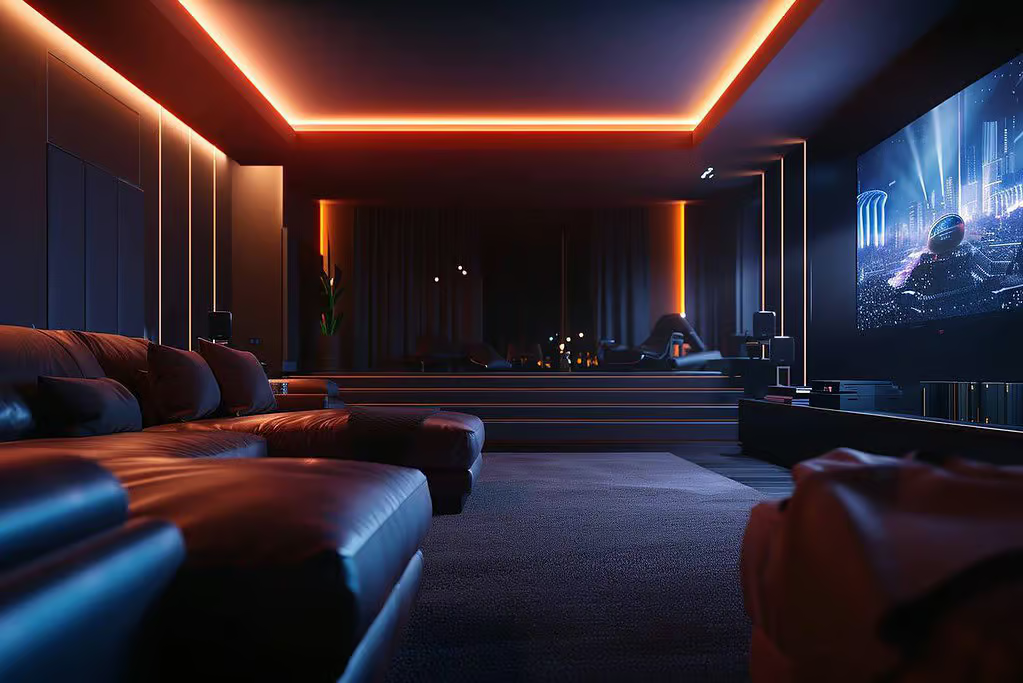
Cove lighting refers to creating a false ceiling and installing light fixtures on its perimeter, creating a hidden light effect. This brings a soft and indirect lighting ideal for the theatre. However, cove doesn’t refer to a specific fixture type, but it’s a technique of installing lights. For cove lighting, you can use LED strips or recessed lights. A combination of both the light types will bring an amazing result, as you can see in the above image. Besides, LED neon flex is also a great choice for general lighting in your home theatre.
7. Armrest Lighting on The Theatre Seats
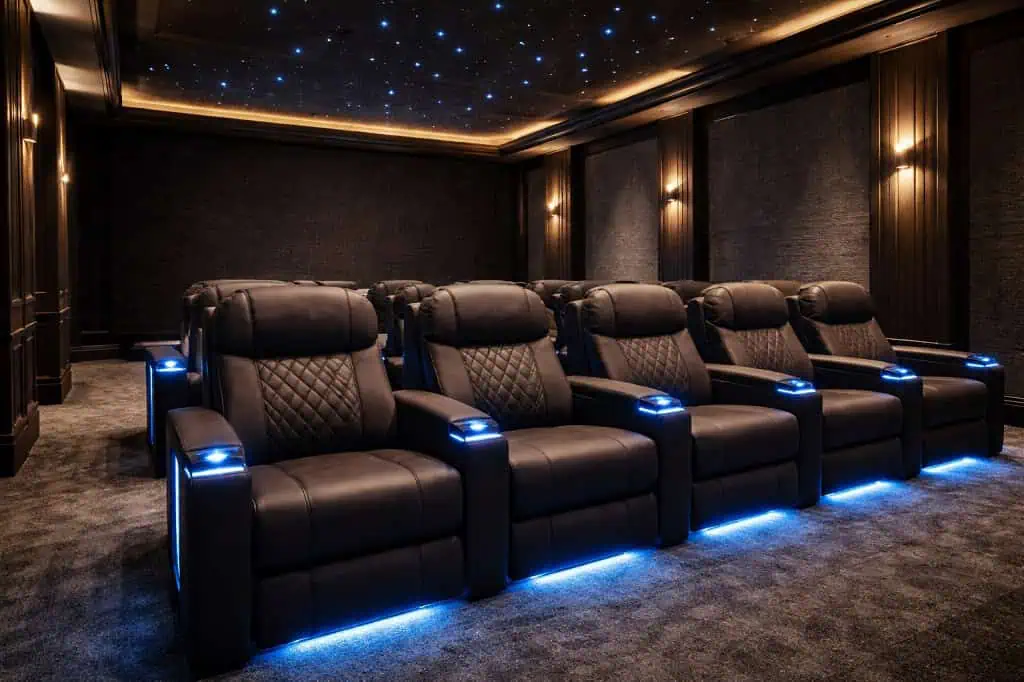
For a real theater feeling, install LED strip lights around the armrest of your theater chair. You can choose the color of your preference, which matches the theme of the room. For the controlling system, go for either a manual switch or a motion sensor.
DIY vs. Professional Installation For Home Theatre Lighting
If you have general knowledge about light installation, you can try the DIY method for your theatre lighting. This would be highly cost-effective. Fixtures like LED strips are very easy to install. You can use these lights for cove lighting, backlighting, and underneath lighting without requiring any professional help. However, the con here is that there is a high chance of mistakes being fixed, which can be time-consuming and expensive.
Therefore, it is better to have a professional installation for home theatre lighting. An expert electrician can set recessed lights, LED strips, and other variants of lights to bring a top-notch outlook. However, you need to have a high budget for this.
Maintance & Upkeep
- Clean the light fixtures regularly
- If you are using motion sensor lights, check if the sensors are working well
- Replace the bulb if you find any flickering or brightness issues
Troubleshotting Common Home Theatre Lighting Problems
Screen Glare Problems
The bright light rays cause glare as if they fall on the screen; as a result, it creates uneasiness while watching the TV. This also occurs when the light faces directly at your eyes. To remove such issues, use dimmable lights and adjust the lights’ brightness to your comfort zone. Besides, you can use diffusers to spread the lights evenly, minimizing the glare effect. And if you are using wall scroners, choose one that is upward or downward facing.
Hard to Find Seats and Items
The theatre room is kept dark while watching movies. So if you are going out for any work or moving to take snacks, it’s common that you will face visibility issues. In this case, use lights beneath the seat, snack bar, and implement floor lighting. If there are any stairs, also light them up. This will make your movement safe.
Confusing Light Controls
When implementing smart control, too many buttons and options can be confusing. To make the controlling system easier to use, remotes should have minimal buttons and clear labels. For basic control, add a switchboard near the door.
Uneven Room Lighting
Improper lighting planning can cause uneven lighting in a room. As a result, one part may seem too bright while the other section remains in the dark. Therefore, it is crucial to maintain a specific distance between the light fixtures. Keep at least 4ft of gap between the wall scroners. It’s better to use diffusers or buy a fixture facing upward for even light spread.
Safety Hazards
As the theatre room mostly remains dark, you may fall while walking. Therefore, add floor lighting to keep walkable visibility even when the movie is playing and the room is dark. In this case, lighting beneath the seat or floor lighting works great. Besides, you can also add motion sensor lights for safety.
FAQs
The Bottom Line
For home theatre lighting, first mark out the targeted zones for ambient, task, and accent lighting and select a fixture accordingly. LED strip lights are the most popular choice for a modern and sleek home theatre outlook. You can use them in cove lighting, backlighting, shelves, or snack bar lighting, under the seats, steps of the stairs, and more. Besides, you can also use LED neon flex to bring a funky or more vibrant look.
Whether you choose LED strips or LED neon flex, LEDYi is your go-to option and best partner for home theatre lighting. We offer you a wide range of strip light variants to fit your theatre’s theme. Besides, all our fixtures come with up to 5 years of warranty. So, why wait anymore? Contact us and book your required lighting from us ASAP!