Ever struggle to read, work, or cook because the lighting just isn’t right? That’s the problem with general lighting: it’s not made for focused tasks. Without proper lighting, your eyes work harder, leading to eye strain, headaches, and fatigue. The American Lighting Association says poor lighting can lower productivity and comfort, especially in work-from-home and study areas.
Now imagine trying to work in a shadowy kitchen or read in a dim corner. It’s frustrating, uncomfortable, and not suitable for your eyes over time.
That’s where task lighting comes in. It gives you the focused, bright light you need to see clearly and work comfortably. This guide will walk you through the best types of task lighting fixtures, where to use them, and what features to look for. Whether it’s your kitchen, office, or bedroom, we’ll help you light it right and make your home work better for you.
Hide
What is Task Lighting?
Task lighting is lighting designed to help you see better while doing specific activities. It’s not meant to light up the whole room, just the area where you need to focus. Think of it as your spotlight for tasks like reading, typing, cooking, or applying makeup.
Unlike general lighting, which spreads light everywhere, task lighting is direct and controlled. It reduces eye strain by giving you the right amount of brightness exactly where it’s needed. The American Optometric Association points out that poor lighting contributes to eye fatigue in over 50% of office workers. This makes task lighting not just valuable, but essential for comfort and productivity.
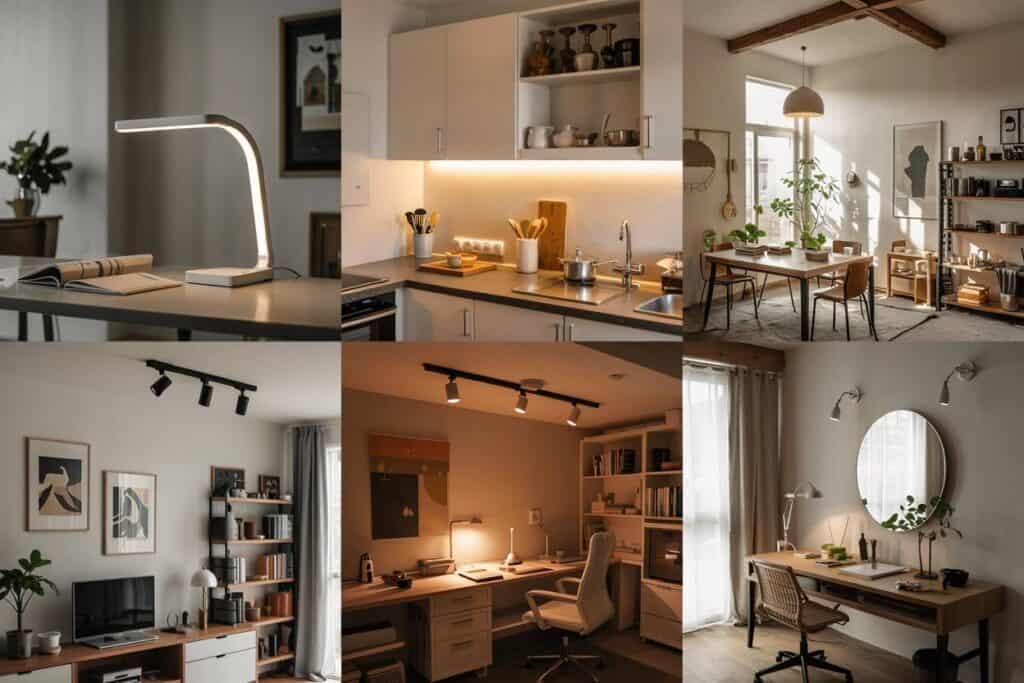
Examples of task lighting include desk lamps, under-cabinet lights in the kitchen, and vanity lights in the bathroom. The goal is simple: give your eyes the help they need so you can concentrate better, work more efficiently, and stay comfortable while doing everyday tasks.
Types of Task Lighting Fixtures
There’s no one-size-fits-all when it comes to task lighting. Different tasks call for different fixtures, and luckily, there are plenty of options to choose from. Whether you’re setting up a workspace or lighting your kitchen counters, here are the most common types of task lights you’ll come across.
1. LED Desk Lamps
LED desk lamps are a go-to for home offices, study desks, and reading nooks. They’re compact, energy-efficient, and often come with adjustable arms or dimming features. The best ones let you control brightness and angle the light exactly where you need it. Great for long hours at the desk without eye strain.
The LED desk lamp market is projected to grow at a CAGR of 13.6% through 2027, showing its rising popularity as work-from-home setups become more common.
2. Under-Cabinet Lights
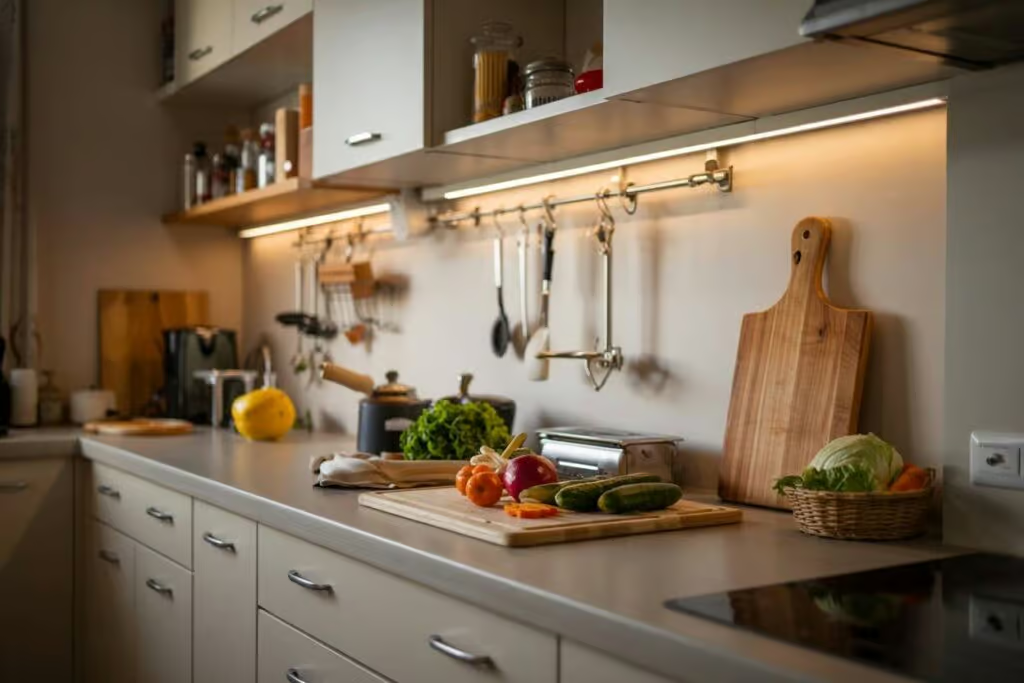
These lights are a game-changer for kitchens. Installed under upper cabinets, they light up your countertops so you can prep meals with a clear view. They also work well in laundry rooms and hobby corners. Most come in sleek LED strips or puck lights, blending right into your cabinetry.
A Houzz kitchen trends report shows that under-cabinet lighting is now included in over 60% of new kitchen renovations.
3. Pendant Lights
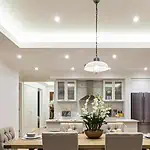
Pendant lights aren’t just decorative; they can double as task lights when hung over kitchen islands, dining tables, or workbenches. Choose a style with a downward-facing shade to direct light where you need it most. They add character while still getting the job done.
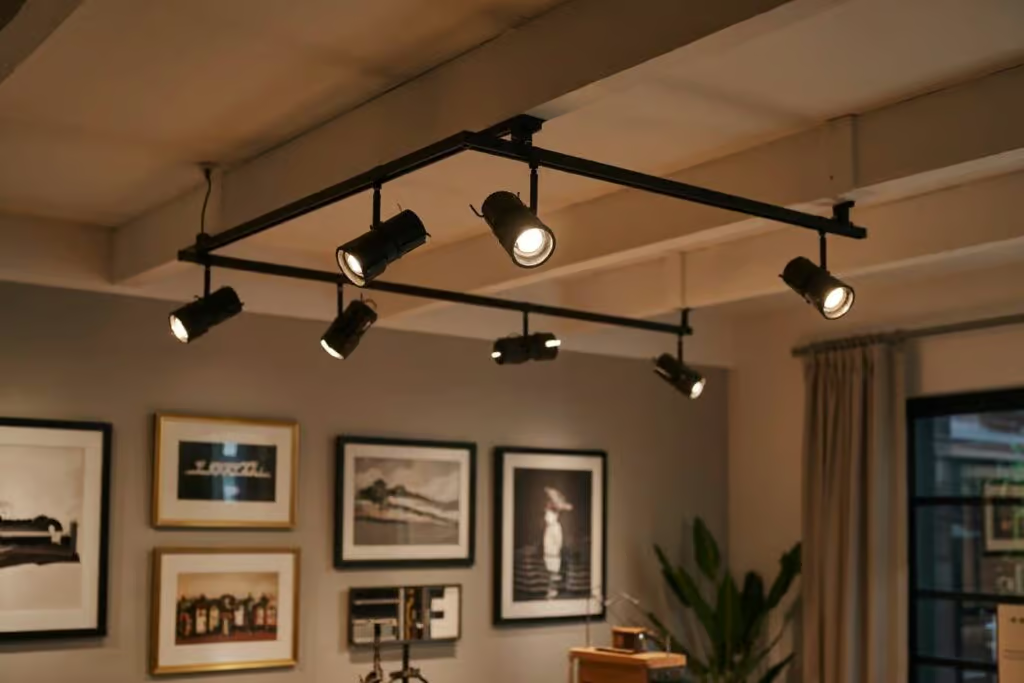
4. Track Lighting
Track lighting is super flexible. It runs along a track, and each light can be moved, angled, or repositioned. Ideal for larger areas like craft rooms, garages, or open-concept kitchens where you need light in different spots. It’s also a favorite for modern spaces.
5. Recessed Downlights
These lights sit flush on your ceiling and aim light directly downward. They’re subtle but powerful, handy for focused lighting in bathrooms, hallways, or over reading chairs. You’ll want to choose adjustable versions so you can angle them for better precision.
6. Floor Lamps
Floor lamps are a quick fix for adding task lighting without any installation. Pick one with an adjustable arm or a focused beam to read, knit, or work from your couch. They’re also great in rental homes where wiring or drilling isn’t an option.
7. Portable Lamps
Portable task lights are lightweight and easy to move wherever you need them. You’ll find clip-on lamps for headboards, rechargeable LED lamps for night shifts, or foldable lights for travel. Handy, especially in shared spaces or small apartments.
8. Wall Sconces
Wall-mounted task lights free up your desk or nightstand and add a touch of style. Swivel sconces work perfectly next to beds or mirrors, giving you a focused beam without crowding the room. Some even come with swing arms for added flexibility.
Why is Task Lighting Important?
Task lighting isn’t just a design feature; it’s a must-have for your daily comfort and productivity. Without the proper lighting, even simple tasks like reading or chopping vegetables can feel like a strain. That’s where task lighting steps in.
It helps you see clearly without shadows or glare. When you’re focused on fine details, like writing, sewing, or fixing something, good lighting reduces eye strain and helps you stay accurate. It also boosts your posture since you’re not squinting or leaning forward to see better.
Real-world studies have shown that optimized lighting in work environments can improve task completion speed by 10–25% (American Society of Interior Designers).
Beyond that, task lighting makes your space safer. In kitchens and workshops, it helps prevent accidents by making sure you see exactly what you’re doing. And in places like bathrooms or stairways, it adds that extra layer of visibility that general lights can’t always cover.
Where to Use Task Lighting in Your Home
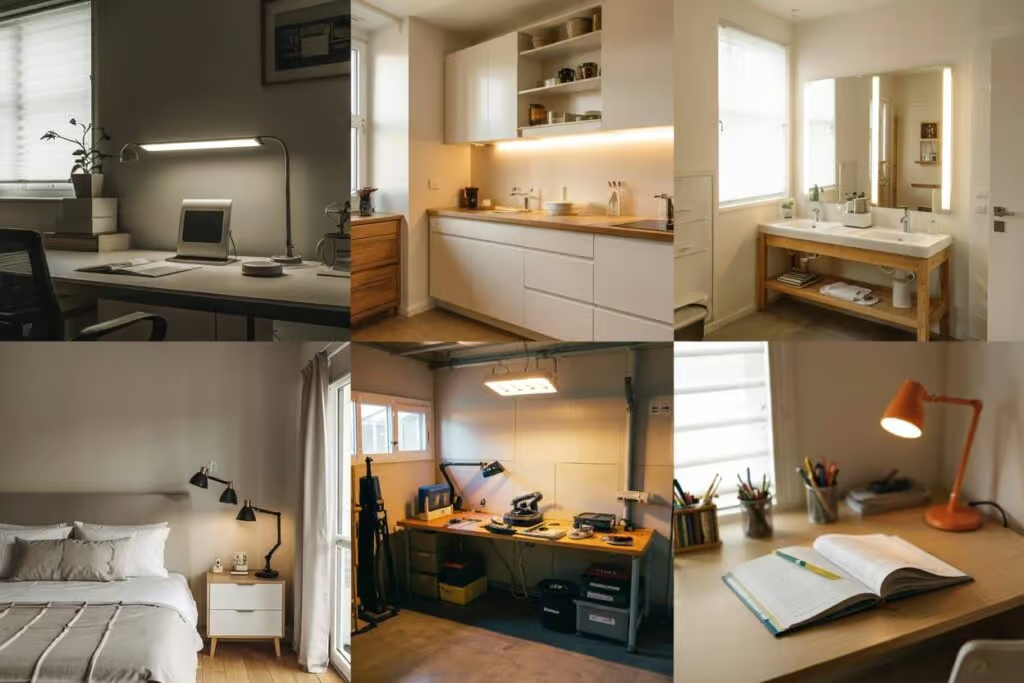
Task lighting can make everyday activities smoother, easier, and safer. But to get the most out of it, you’ve got to place it where it helps. Here’s where task lighting shines around the house:
1. Home Office
This is the top spot where task lighting is essential. Whether you’re typing away at a computer or reviewing documents, a good desk lamp keeps your focus sharp. Choose a model with brightness control and a flexible arm so you can adjust the light without glare on your screen.
2. Kitchen
Chopping, mixing, and reading recipes all require an intense, focused light. Under-cabinet lighting works wonders here. It lights up your countertops without casting shadows from the overhead fixtures. If you’ve got a kitchen island, consider pendant lights right above for added brightness.
3. Bathroom
Think shaving, applying makeup, or skincare routines all need clear, accurate lighting. Wall sconces on either side of your mirror or LED vanity lights above it will give you even light on your face, which overhead bulbs alone can’t provide.
4. Bedroom
Your bedroom isn’t just for sleeping; you might read, knit, or even do light work there. Bedside lamps, wall-mounted sconces, or clip-on lights let you enjoy those activities without waking anyone else. Go for soft, focused lighting that’s easy on the eyes.
5. Garage/Workshop
This space needs serious task lighting, especially for detailed work like sanding, painting, or fixing things. Track lights, LED bars, or focused workbench lamps offer bright, direct light to keep you safe and accurate, even in tight corners.
6. Study Areas for Kids
Homework, reading, arts and crafts, kids need focused light just like adults. Desk lamps with warm white LEDs are ideal. Look for adjustable options so the light can grow with them and suit different activities.
Benefits of Task Lighting
Task lighting isn’t just a nice-to-have; it’s a total game-changer. The right light in the right place can do a lot more than you’d expect. Here’s what makes task lighting so valuable:
- It Improves Visibility. You don’t have to squint or lean in to see what you’re doing. With focused lighting, your workspace stays clear and bright, making everyday tasks way easier.
- It Helps Reduce Eye Strain. Working under poor lighting for too long? Your eyes will feel it. Task lighting gives your eyes a break by delivering the right amount of brightness exactly where it’s needed.
- It Boosts Productivity. Better lighting means fewer distractions. Whether you’re reading, crafting, or working from home, proper task lighting helps you stay focused longer.
- It Supports Safety. In kitchens, garages, and bathrooms, clear lighting helps prevent accidents. It makes sure you can see tools, hot surfaces, or slippery spots.
- It Enhances Style and Function. Task lighting isn’t just practical—it can also look great. From sleek desk lamps to stylish pendants, it adds personality to your space while serving a real purpose.
Studies by the American Society of Interior Designers show that well-lit workspaces can increase productivity by up to 20%.
Choosing the Right Task Light: A Practical Checklist
1. Activity-specific Brightness (Lumens Chart)
Every task needs a different level of brightness. For reading or computer work, 400 to 600 lumens is usually enough. For hobbies or detailed tasks like sewing, go higher, around 800 lumens or more. Check the packaging for lumen output, not just watts.
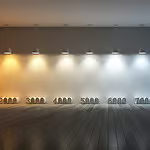
2. Color Temperature (Warm vs Neutral vs Cool White)
Color temperature changes how the light feels.
- Warm White (2700K–3000K): Cozy and relaxing — great for bedrooms.
- Neutral White (3500K–4100K): Balanced and natural — ideal for general tasks.
- Cool White (5000K–6500K): Crisp and energizing — perfect for offices or garages.
3. Directionality and Focus Control
You want a light that points exactly where you need it. Go for lamps with adjustable arms, swivel heads, or gooseneck designs. Fixed lights work too, just be sure they’re installed to aim directly at the task area.
4. Dimming options and Glare Reduction
Being able to dim your light is super helpful. You get control over brightness depending on the time of day or how intense the task is. Also, look for lights with built-in diffusers or matte finishes to cut down on annoying glare.
5. CRI (Color Rendering Index) Considerations
CRI tells you how true colors look under a light source. A CRI of 80 or higher is ideal for most task lighting. If you’re doing color-sensitive work like art or makeup, aim for 90+. It helps you see things more accurately.
Task Lighting Design Tips from Professionals
Layered Lighting Strategy
Don’t rely on just one light source. Layer task lighting with ambient and accent lighting so the space feels balanced. This keeps your room from looking flat or overly harsh while still giving you targeted light where it counts.
Avoiding Shadows with Proper Placement
If the light’s behind you, your own shadow can block what you’re doing. Place the light to the side opposite your dominant hand, if possible.
Use of Reflectors, Diffusers, or Adjustable Heads
These help control and soften the light. Reflectors bounce light more evenly across the task area. Diffusers reduce glare. Adjustable heads let you aim the beam exactly where you want it.
Ergonomics: Avoiding Glare on Screens or Glossy Surfaces
Glare isn’t just annoying, it can lead to eye strain and headaches. Aim task lights away from screens and reflective surfaces. Tilt the head slightly or use shades and filters to cut down on sharp reflections.
Common Mistakes to Avoid with Task Lighting
Even the best light fixture can fall short if it’s used the wrong way. Here are some common mistakes people make with task lighting, and how to avoid them:
Overlighting or Underlighting the Space
Too much light can be just as bad as too little. If your lamp is too bright, it can cause glare or fatigue. Too dim, and you’ll strain your eyes. Check the lumens, not just the watts, and match the brightness to the task at hand.
Poor Placement Leading to Glare or Shadows
The wrong angle can cast harsh shadows or shine directly into your eyes. Always place lights off to the side of your dominant hand and adjust the angle so it highlights the work area without bouncing off reflective surfaces.
Using the Wrong Bulb Type or Color Temperature
Color matters. A warm bulb may feel cozy, but it might not be ideal for reading or crafting. Likewise, a harsh white light in a relaxing space can feel uncomfortable. Match the bulb’s temperature and type to your task and room setting.
Ignoring Adjustable or Dimmable Features
A fixed-brightness lamp limits you. Look for lights with adjustable heads, dimming functions, or color temperature controls. These small features go a long way in making your lighting more versatile and user-friendly.
FAQs
Final Thoughts
Task lighting is more than just a desk lamp or a kitchen strip light; it’s a vital piece of your home’s overall lighting plan. When done right, it helps you focus, reduces eye fatigue, and adds comfort to your everyday routine.
As you plan your lighting, think beyond style. Consider how much brightness you need, where shadows might fall, and how different light temperatures affect your focus and mood. Choosing quality LED task lights with high CRI, proper beam angles, and dimmable features can dramatically improve your space.
The smartest homes combine task lighting with ambient and accent layers, creating rooms that are both beautiful and functional. Whether you’re designing a new home office, upgrading your kitchen, or making a cozy reading nook, task lighting is your best friend for doing things right and seeing them.