You can go through legal steps, a penalty, or a fine for inappropriate light disposal. Many regions have definite set rules and guidance for light recycling and disposal. Therefore, you can’t carelessly put your unused or broken lights in any regular bin.
Whether it’s toxic-free light like LED or other bulbs like incandescent, halogen, fluorescent, or HID, it’s crucial to maintain the correct disposal method. Don’t panic, I have covered it all in this guide; keep scrolling:
Hide
Why is Proper LED Disposal Important?
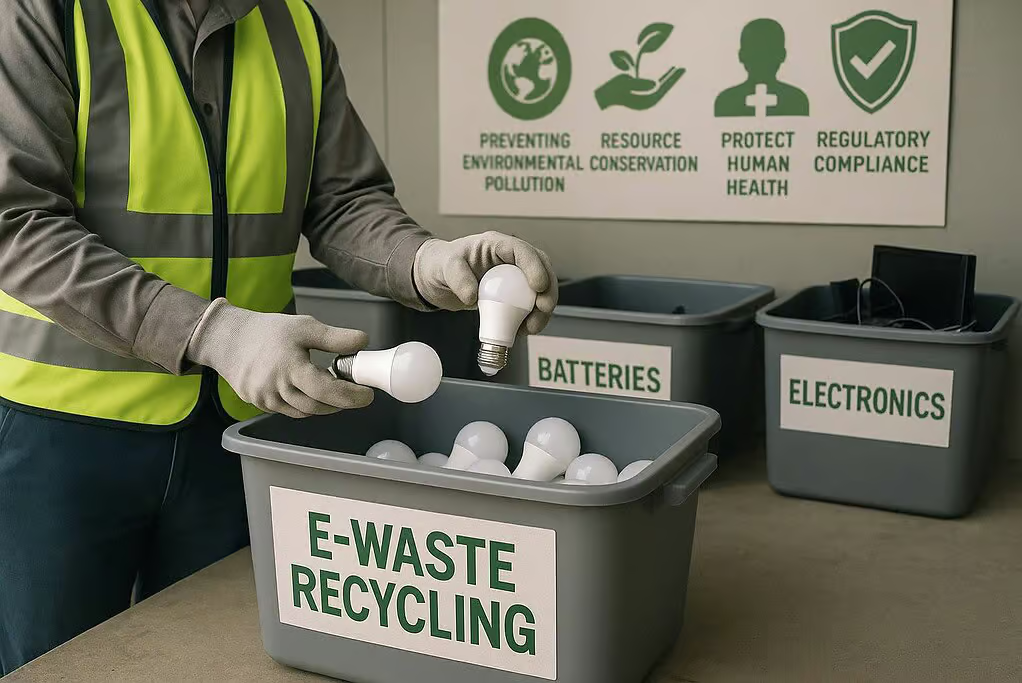
1. Preventing Environmental Pollution
LEDs don’t contain toxic elements like incandescent, halogen or fluorescent lights. Yet plastic or small amounts of metal like arsenic or lead are present in these lights, which contaminates the soil and water if not properly disposed of. Therefore, to prevent environmental pollution, proper disposal of broken or unused LED lights is important.
2. Resource Conservation
LED lights contain recyclable metals like glass, aluminum, plastic, and other materials. When you dispose of the LED bulbs following the local guidelines and give them for recycling, these recycled materials are processed and reused. This way, it contributes to minimizing environmental degradation and conserving energy.
3. Protect Human Health
Improper disposal of LED lights can cause toxic elements to enter the food chain or contaminate drinking water sources. This can directly impact human health and cause different diseases. So, proper disposal is essential to prevent toxic elements from entering the human body.
4. Safety
When LED lights are thrown here and there, it causes a risk for both humans and animals. For instance, if LEDs are thrown in regular dustbins, the broken or sharp edges of glass/plastic or other interior components can harm the dogs or animals when they search for food in these bins. Besides, it can also cut or cause physical harm to both humans and animals.
5. Regulatory Compliance
Many regions have specialized regulations for safe LED disposal. By disposing of the bulbs, following these guidelines ensures abidance of these laws and saves you from any legal action.
How to Dispose of LED Bulbs?
LED bulbs can be thrown into a regular dustbin as they don’t contain toxic elements. However, this is not allowed for all regions. Some regions have special rules and regulations for handling electronic waste products. Based on this, there are two methods to dispose of LED bulbs, these are as follows:
Method 1: Throwing Away LED Bulbs
Step 1: Go through the Regional Laws & Regulations
As LED lights don’t contain mercury, in most regions, it’s considered safe to throw them in a regular dustbin. However, due to the presence of trace amounts of arsenic or lead, some stages or regions have their own set of rules for LED disposal. You can Google whether your region allows the throwing of LEDs in a regular dustbin. Below, I’m adding some regulations for some countries to guide you:
| Country/Region | Regulatory Framework | Key Provisions | Enforcement |
| United States | EPA Universal Waste Rule | Simplifies the handling of certain hazardous wastes, including mercury-containing lamps. Some states treat LEDs as hazardous waste. Federal and state-level enforcement | Federal and state-level enforcement |
| European Union | WEEE Directive | Requires proper collection, recycling, and disposal of electronic products, including LEDs. | Enforced by each EU member state |
| United Kingdom | WEEE Regulations | Makes producers financially responsible for collecting and recycling e-waste. | UK Environment Agency |
| South Korea | Extended Producer Responsibility (EPR) | Obligates manufacturers to recycle a fixed percentage of their product output. | Government-regulated; industry compliance required |
| Japan | Home Appliance Recycling Law | Focuses on recycling household electronics, including LEDs, through designated systems. | Industry-led recycling programs |
| Taiwan | Waste Disposal Act | Enforces e-waste recycling with emphasis on producer responsibility and public participation. | Collaboration between government and industry |
| China | E-Waste Regulations | Bans hazardous waste imports and promotes domestic recycling programs. | Enforced at national and local levels |
| South Africa | e-Waste Association of South Africa (eWASA) | Encourages responsible e-waste management through voluntary and structured programs. | Industry-led with government support |
| Global | Basel Convention | Controls the transboundary movement of hazardous waste, promoting safer global e-waste handling. | Implemented through international cooperation and national laws |
Step 2: Pack The LED Bulb In a Plastic Bag To Throw in the Dustbin
If your region allows throwing off the LEDs in a regular dustbin, it’s ok to go for it. However, don’t throw the bare LED directly in the bin; instead, put it in a plastic bag or wrap it with paper before throwing it. Changing the bulb if it breaks will prevent sharp glass or plastic from ripping the garbage bag. This also makes garbage handling easier and safer.
Method 2: Recycling LED Bulbs
If your region doesn’t allow throwing LED lights in regular dustbins, look for an association that collects LEDs for recycling. Search online for an authorized recycling center in your region that is an expert in handling these items. Besides, some regions host hazardous waste collection events. You can store the waste LEDs and hand them over by contacting your local waste management agency.
Disposal of Other Types of Lights
The disposal method of LEDs is different from other light variants. Why so? If you look at the composition and mechanism of LEDs, you will see that they are environmentally friendly and contain trace amounts or negligible amounts of toxic elements. In contrast, lighting technologies like incandescent or halogen contain harmful elements that adversely affect the environment. Therefore, extra caution is needed when disposing of these lights.
How To Dispose of Incandescent Bulbs?
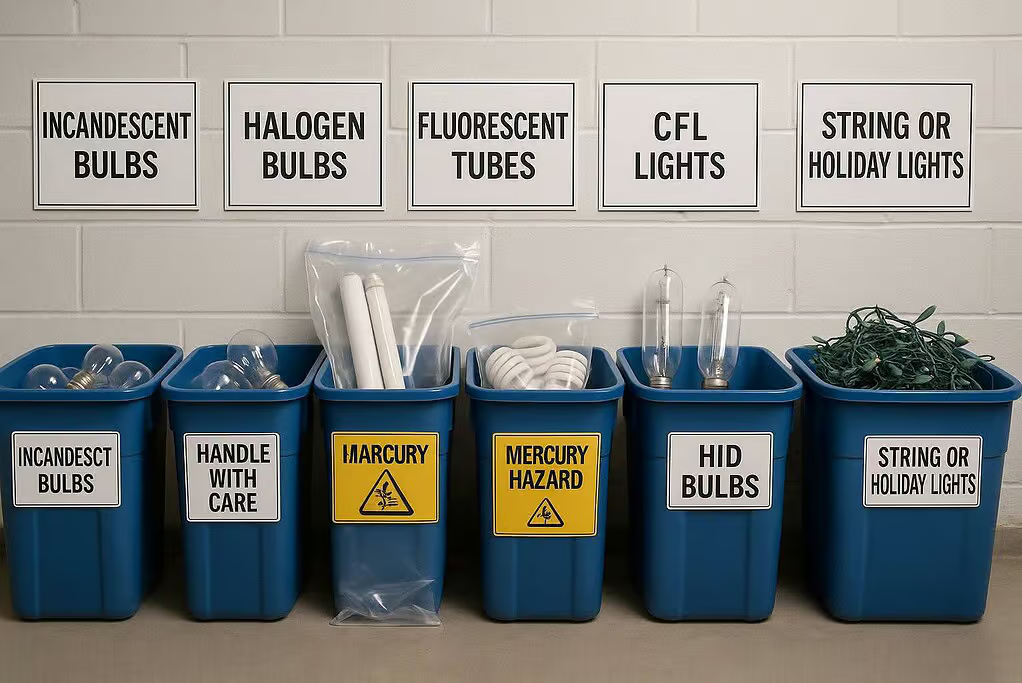
Incandescent bulbs are not accepted by most of the local recycling programs. So, you can throw them into regular trash services. However, for safety measures, it’s better to wrap them in bubble wrap or newspaper. So, if the bulb breaks, it will remain within the bag and will not mix with other garbage.
How To Dispose of Halogen Bulbs?
Halogen bulbs are not suitable for disposal in regular recycling bins. So, it’s better to check whether your area has regulations for halogen bulb disposal or not. If you find no disposal laws, dispose of it in the regular household trash service.
How To Dispose of Fluorescent Tubes?
Avoid throwing fluorescent tubes in your regular trash bin. These lights contain mercury, which is hazardous to health and the environment. Besides, fluorescents are also very fragile and break easily. This is why recycling services and curbside trash refuse to accept fluorescent tubes. Therefore, research well and find recycling facilities that are authorized for fluorescent tube recycling.
How To Dispose of CFL Lights?
Each CFL or Compact fluorescent light (CFL) bulb contains about 4 milligrams of mercury. This mercury from a broken CFL is very toxic and can cause serious health issues. So, throwing CFL light in a regular trans bin is not permitted. In fact, these lights have been banned at the federal level since 2022 and are about to phase out completely by 2025. So, if you have any CFL lights to dispose of, contact an approved recycling facility. If you are in the U.S., take the light to Home Depot, IKEA, Batteries Plus Bulbs, and Lowe’s stores; they accept CFL bulbs for recycling. Another go-to option for CFL bulb recycling is to search Earth911 Recycling for nearby locations and mail-in programs.
How to Dispose of HID Bulbs?
Like CFL lights, HID or High-Intensity Discharge bulbs also contain mercury and are not safe to dispose of in regular trash. You should wrap it in a polybag and take it to an authorized recycling center.
How to Dispose of String or Holiday Lights?
You can dispose of the string or holiday lights in a regular trash bin, give it for recycling, or donate them in thrift shops. Besides, you can separately give off the wire or cables for recycling. Before doing so, separate the plastic decorative elements and bulbs from the string. However, if the holiday light bulbs are big, handle them carefully.
Factors to Consider Before You Dispose of Your Light Bulb
Type of Light Bulb
Not all light bulb types are safe to dispose of in your house trash bins. For instance, CFL, HID, halogen, and fluorescent bulbs contain toxic elements. These bulbs should be handled with extra care and given to authorized organizations for recycling. However, lights like LED and incandescent are okay to throw in a regular trash bin. Yet, you should go through your regional guidelines for light disposal.
Mercury Content in the Light Bulb
Not all light bulb types are safe to dispose of in your house trash bins. For instance, CFL, HID, halogen, and fluorescent bulbs contain toxic elements. These bulbs should be handled with extra care and given to authorized organizations for recycling. However, lights like LED and incandescent are okay to throw in a regular trash bin. Yet, you should go through your regional guidelines for light disposal.
- Fluorescent bulbs, including CFLs
- High-Intensity Discharge (HID) Bulbs like mercury vapor lamps, metal halide lamps, and high-pressure sodium lamps
- Traditional neon bulbs that use neon gas
- Some Ultraviolet (UV) lamps
- Blacklight
Is the Bulb Intact or Broken?
If your bulb is intact and you want to dispose of it, simply wrap it in a paper or polybag and throw it in the trash bin or send it to recycling facilities, whichever applies to your fixture. However, if the bulb is broken, take additional measures to ensure it is safe. In that case, insert the broken pieces of the bulb in a poly bag and tie the knot. It’s better to use double polybags for additional safety, so the sharp edges of the broken pieces don’t tear out of the bag.
However, if it’s a fluorescent, CFL, or any bulb containing mercury, open the windows and install it as soon as the bulb breaks. Take all measures to ensure sufficient ventilation and leave the place for 5 to 10 minutes. Why do so? This type of bulb contains mercury, which is harmful if inhaled. This is why ventilation is important to let the mercury vapor out of the room.
Next, scoop the broken pieces into a dustpan and slide them into a zip-lock bag. Use duct tape to clean the powder and small glass pieces. Place all other light parts into the bag, seal it, and send them for recycling. After packing the broken bulb, clean the area with a wet towel. You must keep children, pregnant women, and pets away from the spot while cleaning it up.
Legal Regulations
Check the website of your local government or municipality for guidance on disposing of light bulbs. You can use keywords like light bulb recycle or electronic waste guidelines for effective results. Besides, there are some countries that have organizations or agencies to look after these aspects. Research well and find out if there are any legal regulations for your area in terms of light bulb disposal, and abide by them accordingly.
Recycling Options
Consider if your bulbs can be recycled. If you are looking for recycling options rather than disposing of them. For instance, you can contact manufacturers that collect LED or CFLs and give the lights to waste collection events. Besides, if your light is still in use and you want to replace it with a new one, giving it as a donation is a better option than throwing it out. You can also resell or donate them at thrift shops.
Disposing of or Recycling: Which Is Best For LED & Other Bulbs?
Recycling is always a sustainable and greener step than disposal. However, not all bulbs are recyclable. Here is a list of lights which you can recycle and which you can’t:
| Recyclable Light Bulbs | • LED bulbs • Compact fluorescent lamps (CFLs) • Fluorescent tubes |
| Non-recyclable Light bulbs | • Traditional incandescent bulb • Halogen bulb |
When you dispose of LED or other bulbs, it adds to landfill waste, which badly impacts the environment. Proper disposal can also cause safety hazards. Besides, in some regions, it’s illegal or banned to dispose of LEDs.
In contrast, recycling allows the recovery of valuable materials like aluminum, glass, and circuit components. This conserves the environment and minimizes waste as the materials are reused. Recycling is also safe, as the entire process is handled by professionals.
Recyclable parts of lights include the following:
- Metals: Aluminum, copper, gold, silver
- Electronics: Circuit board, capacitors, and rare earth elements
- Others: Glass, plastic, lenses, brackets
So, if your local rules allow, it’s ok to dispose of bulbs, but recycling is always the best option considering the natural impact.
Toxic Bulb Recycling Services
1. Local Retailers
Contact manufacturers who offer retail take-back programs. They often accept LED, fluorescent, and HID bulbs- they can be free or offer you a small amount for it. Retailers that offer a drop-off box for recycling toxic bulbs include the following:
2. Waste Collection Agencies
Local governments often host e-waste or hazardous waste collection events. You can hand over your unused light or run out of bulbs at these events. These events can be free or fee-based services and usually occur once or twice in different regions.
- Home Depot
- Ikea
- Ace Hardware
- Lowe’s Home Improvement
- Batteries Plus
3. Mail-back Recycling Services
Mail-back recycling services are certified fee-based services that handle light bulbs containing toxic elements, which local facilities don’t allow. They send you a labeled and hazardous shipping-approved prepaid box, bucket, or mailer. You need to put your bulbs (like CFLs, fluorescent tubes, LEDs) inside the container, seal it, and ship it back. Their recycling services handle the next with professionalism. The most reliable and highly popular mail-back recycling services include:
- EcoLights
- BulbCycle
- LampMaster
FAQs
The Bottom Line
Whether you are disposing of the light in your house trash bin or taking it for recycling, always pack the light in a polybag or wrap it in paper. Before disposing of it, it’s mandatory to check the local guidance and follow it. Incandescent and halogen lights are ready to go in the dustbin as they are non-recyclable.
However, for LED lights, it’s best to recycle. If you find any waste collection events or recycling facilities, take your bulb to them. And if your lights are still in use, consider donating to thrift shops. Nevertheless, fluorescent, CFL, and other bulbs containing mercury need to be handled carefully. Take these to a hazardous waste or recycling center, where professionals will handle them.