We spend over 90% of our time indoors (EPA, 2023), surrounded by artificial lighting that doesn’t follow our body’s natural rhythm. This disrupts your circadian rhythm, the internal clock that controls your sleep, mood, energy, and overall health.
When lighting stays bright and cool late into the evening, it confuses your brain, delays melatonin release, and leads to poor sleep, fatigue, and lower focus during the day. Over time, this can lead to increased stress levels, weakened immunity, and a negative impact on mental well-being.
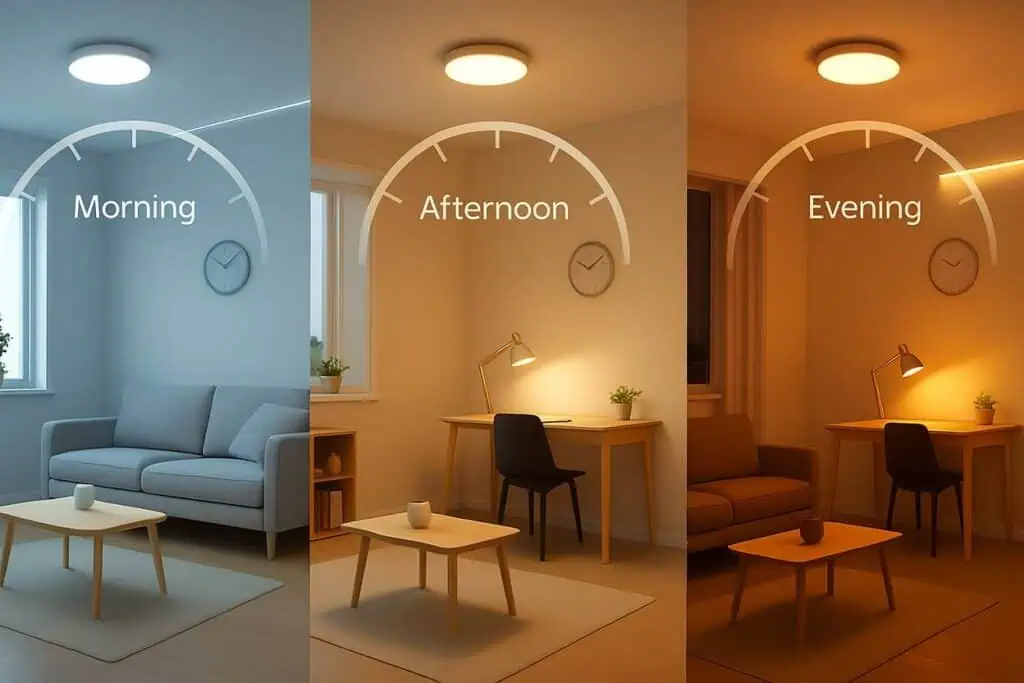
Circadian rhythm lighting mimics the sun’s natural cycle, featuring cool and bright light in the morning and warm, dim light at night. Backed by research, this lighting method supports better sleep, sharper focus, and improved health. Whether at home, work, or in healthcare spaces, it helps your body stay in sync with nature, even indoors. In this guide, we’ll show you how it works and how to use it effectively.
Hide
What Is Circadian Rhythm Lighting?
Circadian rhythm lighting is designed to support your body’s natural 24-hour cycle by adjusting the color and intensity of artificial light to mimic sunlight. Unlike conventional lighting, this approach helps you stay alert during the day and wind down at night, promoting better sleep and overall health.
Understanding Your Body’s Internal Clock
Your body runs on a circadian rhythm, a biological clock that regulates sleep, wakefulness, hormone release, and body temperature over a 24-hour cycle. This rhythm is controlled by the suprachiasmatic nucleus (SCN) in the brain and is highly sensitive to light.
In the morning, exposure to blue-enriched daylight (460–480 nm) triggers a drop in melatonin and a spike in cortisol, helping you wake up. At night, lower light levels allow melatonin to rise again, preparing your body for sleep.
Circadian Lighting vs. Traditional Lighting
Traditional indoor lighting often stays static: cool and bright in the evening or dim and warm in the morning, which is counterproductive to your body’s needs. In contrast, circadian lighting systems mimic the natural progression of sunlight throughout the day by adjusting:
- Color temperature (warm to cool light, measured in Kelvins)
- Light intensity (lux or lumens)
- Timing (gradual shifts to mirror dawn, noon, dusk)
How Circadian Lighting Works
To effectively influence your internal clock, circadian lighting systems utilize dynamic shifts in brightness and color temperature. These changes simulate natural sunlight throughout the day. The goal is to expose you to energizing light when needed and relaxing light when your body prepares for rest.
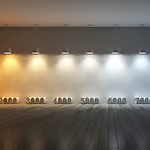
Light Spectrum and Color Temperature
Light color is measured in Kelvins (K):
- 6500K (Cool Daylight) – for alertness in the morning
- 4000K–5000K (Neutral White) – for midday concentration
- 1800K–2700K (Warm White) – for evening relaxation
According to a 2022 study published in Sleep Health, morning exposure to 5000K light improves attention span and reaction time, while warmer light at night supports natural melatonin production.
Dynamic Intensity and Timing
Circadian lighting also involves adjusting light intensity (measured in lux):
- 1000+ lux for wakefulness in the morning
- <50 lux to promote melatonin and rest at night
Leading systems use time-based programming or sensors to automatically adjust light levels throughout the day, a process known as biodynamic lighting.
Health Benefits of Circadian Rhythm Lighting
Circadian lighting isn’t just about comfort; it’s scientifically linked to improved sleep, focus, mood, and long-term wellness. By supporting your hormonal rhythms, this lighting method can enhance your physical and mental performance while reducing health risks associated with poor lighting environments.
Sleep Quality and Mental Health
According to Harvard Medical School, exposure to blue light after sunset can delay melatonin release by 90 minutes, potentially leading to poor sleep. Circadian lighting counteracts this by using warm, dim light in the evening, helping your body maintain its natural rhythm.
In hospitals, studies show that patients exposed to circadian lighting report better sleep and faster recovery. For example, a 2021 study in the Journal of Clinical Sleep Medicine found significant improvements in sleep quality and depression scores in patients exposed to dynamic lighting systems.
Improved Productivity and Alertness
Daylight-quality light (5000K–6500K) helps enhance cognitive function. In office settings, circadian lighting has been shown to:
- Increase productivity by up to 18% (Lighting Europe, 2017)
- Reduce fatigue and boost morale
- Improve accuracy and attention to detail
According to a 2020 study by the University of Twente, students exposed to morning bright light in classrooms demonstrated better test performance and focus.
Mood Regulation and Well-being
Proper light exposure helps stabilize cortisol and serotonin levels, thereby improving mood and energy. Circadian lighting can help manage:
- Seasonal Affective Disorder (SAD)
- Stress and anxiety
- Hormonal imbalances and fatigue
Where Can Circadian Lighting Be Used?
This lighting system isn’t limited to homes. Offices, hospitals, schools, and senior care facilities are adopting circadian lighting to support well-being and productivity. Each setting has unique needs, and tailoring lighting design to those rhythms makes a measurable impact on people’s quality of life.
At Home
- Bedrooms: Install tunable LED fixtures that shift from cool morning light to warm evening hues
- Living Rooms: Use dimmable bulbs with scene settings
- Bathrooms: Soft amber night lighting to avoid melatonin disruption during late visits
- Kitchens and Studies: Use daylight-spectrum lighting in the morning
Offices and Workspaces
- Daylight-tuned lights for peak focus hours (9 AM to 1 PM)
- Scene control for meetings, breaks, and evening wrap-ups
- Integration with WELL Building Standards and LEED certifications
Healthcare and Senior Care
- Dementia patients experience less confusion when light mimics day-night cycles
- Night shift nurses perform better with proper lighting transitions
- Hospitals like St. Mary’s in London have installed circadian lighting to shorten recovery time
Educational Institutions
Schools using circadian lighting see:
- Fewer behavioral issues
- More alert students
- Better retention and test performance
The Kjellberg School in Germany implemented full circadian lighting and reported a 30% drop in absenteeism.
Types of Circadian Rhythm Lighting Systems
There are several lighting systems designed to support circadian health, from tunable white LEDs to advanced full-spectrum and smart home systems. The right choice depends on your space, budget, and lighting goals. This section outlines what’s available and how these technologies work.
Tunable White LEDs
These lights shift from 2700K to 6500K, allowing you to simulate natural light patterns using:
- App control or wall-mounted dimmers
- Smart home automation
- Manual presets for different times of day
RGBW and Full-Spectrum Lights
These are often used in commercial or high-end residential projects. They:
- Provide fine-tuned control over hue, saturation, and brightness
- Can match sunrise/sunset colors more closely
- Are often paired with circadian wellness programs
Smart Lighting Systems
Top-rated circadian lighting products in 2025 include:
- Philips Hue Gradient – preset circadian modes
- BIOS SkyBlue – NASA-developed circadian lighting
- Lutron Ketra – premium circadian and architectural control
- Savant Daylight Mode – dynamic, weather-based circadian syncing
Choosing the Right Circadian Lighting Setup
To get the most out of circadian lighting, consider how your daily routine aligns with the adjustments in lighting. From color temperature to control systems, every detail matters. Here’s how to choose a setup that supports your rhythm without overwhelming your space or wallet.
What to Consider
- Your wake/sleep time
- Natural light availability in your space
- The function of each room
- Your tech comfort level (manual vs. automated systems)
- Budget: $30 for smart bulbs or $3000+ for whole-home systems
Day vs. Night Configuration
| Time of Day | Color Temperature | Light Level | Purpose |
| Morning | 5000K–6500K | 1000+ lux | Energize & awaken |
| Midday | 4000K–5000K | 500–1000 lux | Focus & Productivity |
| Evening | 2700K–3000K | <200 lux | Wind down & relax |
| Night | 1800K–2400K | <50 lux | Prepare for sleep |
Common Mistakes to Avoid
Even with the best lighting equipment, incorrect use can disrupt your circadian cycle. People often overlook timing, brightness, and placement, leading to poor results. Avoid these common mistakes to ensure that your lighting supports health rather than works against it.
- Using cool white lights after sunset
- Leaving bright lights on late into the night
- Not dimming lights in bedrooms or nurseries
- Ignoring natural daylight and over-relying on artificial lighting
- Skipping automated scheduling, resulting in inconsistent light cues
Smart Home and Wearable Integration
Lighting systems are increasingly syncing with:
- Fitness trackers and sleep monitors
- AI-powered home assistants
- Real-time daylight simulation based on geolocation and weather
FAQs
Conclusion
Circadian rhythm lighting helps your body stay in sync with nature, even indoors. Adjusting the light to match the time of day can support better sleep, mood, and focus. Backed by science and easy to use, it’s a smart way to improve your daily health.
Start small by changing a bulb, adjusting your schedule, and letting your lighting work for you, not against you.