Do you not want your residence to be perfectly lit for all purposes? Then, following the standards of lighting levels is a must for optimizing your home’s lighting system.
Well-recognized organizations like IES, CIBSE, and CSA have developed guidelines on proper lighting for particular areas. By utilizing their lighting level recommendations, you will not have to worry about the visual requirements of your home.
Therefore, let’s dive into the residential lighting level recommendation and light your house perfectly.
Hide
What Are The Units For Lighting Levels?
You will have to understand the units of lighting levels to properly use the IES guideline. So, go through the section below:
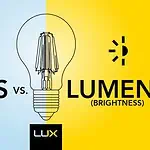
- Lumen: Lumen refers to the total amount of visible light emitted by a source. More lumens of a lighting source means a brighter output and better visibility.
- Lux: Lux is the unit to measure light falling on a surface. One lux is equal to one lumen per square meter. To do important tasks, you will need around 500 lux of light in your room. On the other hand, your living room for relaxation does not need more than 150 lux of light.
- Foot-candle: It is similar to lux in lighting level calculation. Foot-candles are mainly used in the United States. One foot-candle is equal to one lumen per square foot. Also, it is equivalent to 10.764 lux.
Benefits Of Following Recommended Lighting Levels
- Setting the lighting system according to the recommended levels provides maximum visibility at minimum energy consumption.
- Compliance with the recommended guideline ensures a well-lit space.
- Makes residence navigation much easier.
- The chance of accidents due to improper lighting decreases.
General Lighting Level Recommendation For Your Residence In Lux Units
| Area for Lighting | Lux |
| Bedroom | 215-538 |
| Living room | 108-215 |
| Dining room | 108-215 |
| Kitchen- general lighting | 215-538 |
| Kitchen- cooking area | 538-1076 |
| Study room | 538-1076 |
| Bathroom | 215-538 |
| Hallway | 54-108 |
| Garage | 215-807 |
| Basement | 215-1076 |
| Corridor and staircase | 100 |
| Laundry room | 200 |
IES, CIBSE, and CSA: Recommended Home Lighting Standards
Illuminating Engineering Society (IES)
The Illuminating Engineering Society (IES) is a global educational and technical authority on illumination. This organization was founded in 1906 to spread the knowledge of lighting standards to the public. The IES lighting standards for residential areas are given below.
| Area for Lighting | Foot-candles |
| Bedroom | 20-50 |
| Living room | 10-20 |
| Dining room | 10-20 |
| Kitchen- general lighting | 20-50 |
| Kitchen- preparing and cooking | 50-100 |
| Rooms for Difficult Reading and Writing | 50-100 |
| Bathroom | 20-50 |
| Hallway | 5-10 |
| Garage Workshop | 20-75 |
| Basement- Exercise and Recreation | 30 |
| Basement- Laundry | 20-100 |
Chartered Institution of Building Services Engineers (CIBSE)
The Chartered Institution of Building Services Engineers (CIBSE) is the professional entity that works to advance building services engineering. This London-based institution sets guidelines for the construction industry.
The CIBSE lighting standards for residential areas are as follows:
| Area | Illuminance (Lux) | Limiting Glare Rating | Minimum Color Rendering (Ra) |
| Lounge | 100 – 300 | 19 | 80 |
| Kitchen | 150 – 300 | – | 80 |
| Bedroom | 150 | – | 80 |
| Toilet | 100 | – | 80 |
Canadian Standards Association (CSA)
There are a few requirements set by CSA for residential lighting that include guidelines for basement, entrance, and garage lighting. First, the entrance of a residence needs to have an exterior lighting outlet whose wall switch will be installed inside the residence. After that, the unfinished basements should have a lighting outlet with a fixture for every 30 square meters. Also, the switch of the outlet near the stairs should be at the top of the stairs. Moreover, storage rooms and garages must have a light source with a fixture near the doors.
Residential Lighting Level Suggestion for Different Lighting Types
General Lighting
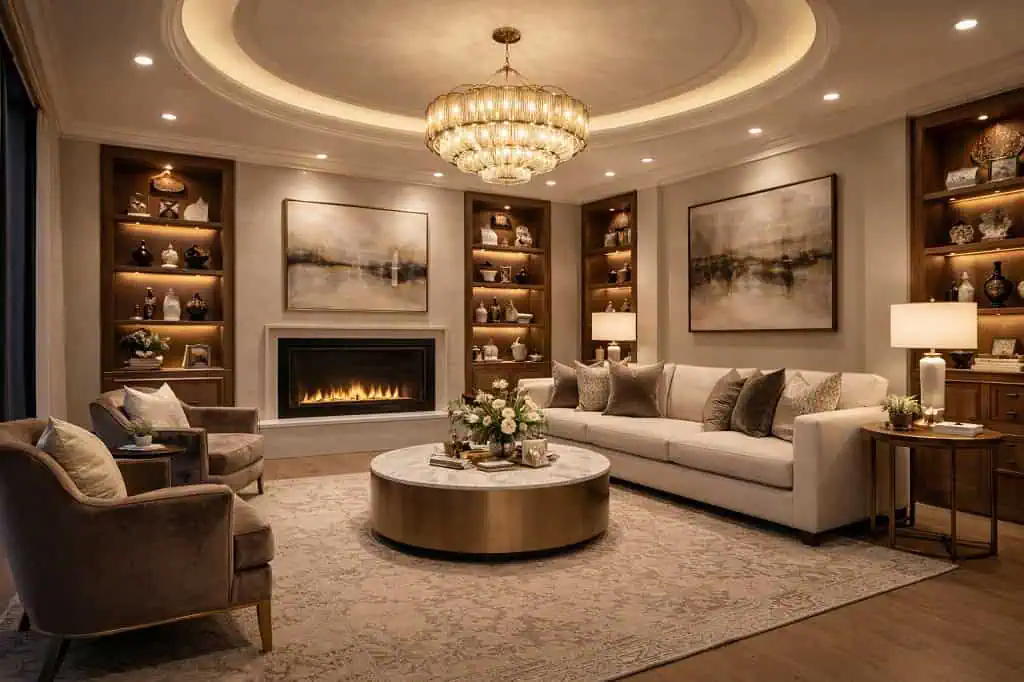
General lighting provides the basic source of illumination in a place. LED strips, modules, luminaries, and spotlights are mostly used for this purpose. While setting up general lighting, make sure it matches the desired illuminance level (lux) of the room. Also, use dimmers or control settings to enjoy a level of flexibility in adjusting light.
Accent Lighting
Accent lighting is necessary to highlight the architectural features and decor of a room. LED strips and spotlights are generally used for accent lighting. You can set up the control system on your phone or tablet to adjust light intensity or color according to your mood.
Task Lighting
Task lighting offers illumination for a specific activity. You will find LED lamps, modules, and spotlights for this purpose. Furthermore, use the fixtures wisely and set the color rendering index (CRI) at 98 or more for carrying out tasks like cooking, studying, etc.
Room-by-Room Lighting Recommendations
Living Room Lighting
In general, living room lighting gives out a relaxing atmosphere. To achieve this atmosphere, adjust the floor lights between 100 and 150 lux. Apart from that, combine general and ambient lighting with sources like pendant, ceiling lamp, or cove lights in your living room.
Dining Room Lighting
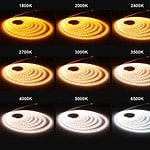
Use LED strip lights or cove lights to set up the background light of the dining room. After that, set table lamps at different spots against this backdrop. Besides, fix the color temperature of the room between 2,700K and 3,000K and the illuminance level at 150 lux for the floor lights. Also, the tabletop should have an illuminance of 150-200 lux and CRI 98 for dining.
Bedroom and Lounge Lighting
The lighting of bedrooms and lounges should create a soothing environment. So, set up indirect lighting with LED strips inside cove lights. Also, install a separate outlet for bedside lighting, like bedside lamps or wall-mounted fixtures. It will provide task lighting for reading or other tasks.
The range of lighting levels in bedrooms falls between 50 and 150 lux at floor level and 400 lux for bedside lights. The CRI of bedrooms should be at least 90 to get proper illumination.
Study Room and Home Office Lighting
Install the lights cautiously in your study room and home office, which helps focus without getting eye strain. To reach this goal, set a diffuse background light with cove lights and use lamps for task lighting. The illuminance level of desk lights should be within 400- 500 lux.
Kitchen Lighting
As sharp tools are used in kitchens, you will need a minimum of 400 lux of task lighting there. You can install LED strips or modules under the cupboards and above the sink. On kitchen floors, the luminance level of 150-200 lux is enough. Moreover, make sure all the light sources are well-distributed in the kitchen. The recommended color temperature for the kitchen is 2,700K- 3,000K.
Bathroom Lighting
The illumination level of bathroom floors should be within 250-300 lux. You will need an appropriate IP protection level to ensure the waterproof level of the lights. In addition, use LED downlights over the bath and shower and task lights around the mirrors with separate circuits.
Hallway Lighting
For hallway lighting, the lux level should be around 100 lux at the floor level. You need to install lights along the stairs or above them for safe movement. Also, set up a two-way switching system at both the top and the bottom of flights. The recommended color temperature is around 3000 K for stairs and landings.
Calculating Lumen Requirements for Your Space
Understanding The Formula
- Formula for lumen requirement:
| Required lumens = Area of room in square footage × Recommended footcandlesor Required lumens = Area of room in square meters × Recommended lux |
- Formula for area of room: Multiply the length of the room by its width.
Applying The Formula For Different Spaces
- Calculation of the lumen requirement for a bedroom
If the length of the bedroom is 12 feet and the width is 14 feet, the area will be 12ft × 14ft = 168 square feet. Considering the minimum recommended lighting level of 20 fc, the lumen requirement will be 168 × 20 = 3,360 lumens. Then divide the total lumens by how many bulbs you want to install in your bedroom. In this case, if you want four bulbs in the bedroom, you will need 3360 ÷ 4 = 840 or four 840 lumens equivalent bulbs to meet the total lumen requirement.
Alternatively, if the length and width of the bedroom are 4 meters and 5 meters, then the total area will be 5×4 = 20 square meters. After that, considering the minimum recommended lighting level of bedroom 215 lux, the lumen requirement will be 20 × 215 = 4300 lumens.
- Calculation of the lumen requirement for a kitchen
When the length of the kitchen is 12 feet, and the width is 16 feet, the total area is 12ft × 16ft = 192 square feet. For general lighting, consider the recommended lighting level as 40 foot-candles.
Then the output will be 192 × 40 = 7,680 lumens. In addition, consider 70 foot-candles for task lighting in the 30 square feet of counters. Then you are going to need 30 × 70 = 2,100 lumens. In total, the amount of required lumens will be ( 7680 + 2100) = 9,780 lumens for the kitchen.
- Calculation of the lumen requirement for a bathroom
Suppose the area of your bathroom is 80 square feet. Then you will need 80 × 30 = 2,400 lumens for general lighting. Additionally, the required lumen for vanity task lighting will be 10 × 80 = 800 lumens. Finally, the total amount will be 3,200 lumens.
Other Factors That Impact The Lumen Requirements
Ceiling Height
The recommended lighting levels are mainly for the standard footcandles of 8-foot ceilings. If you are dealing with higher ceilings, increase the lumens proportionally with the increase in feet of the ceiling. Moreover, you will need fixtures with higher lumen outputs and narrower beam angles for vaulted ceilings.
Wall Color
If the wall colors are light, the walls will reflect more light and the room will look brighter. Then you will not need high-output lighting. On the other hand, you will need more lumens for dark colored walls as dark colors absorb light.
Wall Finish
Matte wall finish absorbs light, so you need to increase lighting levels by 10-20% to meet the lumen requirement. In contrast, glossy wall finishes reflect light and reduce the lumen requirement.
Fixture Types
Each fixture has a different purpose and use. For instance, wall scones reduce glare by emitting indirect light, pendant lights are great for task lighting, and so on. So, choose the appropriate fixture type to balance the brightness and lumen requirement of your room.
Tips To Ensure Your Lighting Meets The Recommended Levels
- Check Light Levels: First, measure the light intensity of your room at different positions. Do not forget to use a light meter to get accurate values of light levels.
- Meet the Minimum Criteria: You need to make sure the lighting system meets the minimum suggested lumens. Then you can add supplemental lighting according to your needs.
- Buy Dimmable Fixtures: You have to use dimmers for higher-output lights.
- Avoid Over-Lighting Or Under-lighting: To avoid excessive brightness, install lower-lumen bulbs with dimmers and add diffusers. Also, remove shadows in the room using task lights and reposition fixtures.
- Use Natural Daylight: Combine the natural daylight with your lighting system to get the required lumens. Also, natural light will offer you visual comfort.
- Focus on Energy-efficient Lighting Source: You can utilize LED bulbs as an energy-efficient option. In addition, it will save your electricity bill.
- Utilize Layered Lighting: Create a layered design with ambient, task, and accent lighting. This type of layered lighting will evenly distribute light and serve different purposes.
FAQs
The Bottom Line
You must have a good knowledge of recommended lighting levels to avoid under-lighting or over-lighting your residence. Also, consider wall color, ceiling height, fixture type, and the purpose of the room while calculating the lumen requirement of each room. Thus, you can get a durable and functional lighting system in your residence.
However, if you want stylish lighting for your residential area, LED strips are your go-to choice. Unlike traditional choices, they have a flexible and flat-thin body that you can cut to define size. Moreover, it can be customized based on your lighting needs. So, choose the top-quality LED strips from LEDYi and take your residential lighting to the next level!