
We are here to help you master the art of illuminating your home with confidence and ease. Whether you want to upgrade your kitchen ambiance or add a modern glow to your living room, our guide provides a clear, professional walkthrough to help you wire LED strip lights safely.
Safety is our top priority during every installation project. Before you begin any work, you must disconnect the power at your circuit breaker or fuse box. This simple step prevents electrical hazards, including fire, shock, or even death.
By following these expert tips, you can ensure your project remains both efficient and secure. Let us transform your space into a brilliant, inviting environment together.
Key Takeaways
- Always turn off the main power at the circuit breaker before starting your installation.
- Verify your voltage requirements to prevent damage to your new equipment.
- Use high-quality connectors to ensure a stable and long-lasting electrical connection.
- Double-check all polarity markings to avoid common wiring mistakes.
- Test your setup on a flat surface before mounting it permanently to your walls.
Understanding LED Strip Lights
We believe that a successful installation starts with a solid grasp of how LED strip lighting functions in various environments. By focusing on these core technologies, we help you select the most efficient solution for your unique home or business needs.
Types of LED Strip Lights
There are six primary categories of strips designed to meet different aesthetic and functional goals. Choosing the right one depends on your specific vision for the space:
- Monochrome: Provides a single, steady color for clean, simple illumination.
- Dimmable White: Allows you to adjust brightness levels to create the perfect mood.
- RGB: Offers a full spectrum of colors for dynamic, creative lighting effects.
- RGBW: Combines color-changing capabilities with a dedicated white chip for better versatility.
- RGBCCT: Features adjustable color temperature and full color mixing for ultimate control.
- Addressable: Enables individual control over each LED, perfect for complex animations.
Common Uses for LED Strip Lights
The versatility of these products makes them a favorite for both residential and commercial applications. You can easily enhance your interior decor or extend your living space into the garden with high-quality outdoor LED light strips.
Common applications include under-cabinet lighting, accent lighting for shelving, and architectural highlights. When selecting outdoor LED light strips, always ensure the product has the correct IP rating to withstand environmental factors like moisture and dust.
Key Features to Consider
When you start your project, keep a few essential features in mind to ensure long-term satisfaction. Efficiency and ease of use are the pillars of a great lighting design.
Consider the following factors before making your purchase:
- Voltage Compatibility: Ensure your power supply matches the strip requirements.
- Color Rendering Index (CRI): Look for high CRI values to ensure colors look natural and vibrant.
- Smart Integration: Many modern strips offer 2.4GHz connectivity for seamless app or voice control.
- Durability: Choose materials that offer protection against heat buildup and physical wear.
Tools and Materials Needed for Wiring
We believe that a smooth installation experience starts with having everything you need within arm’s reach. Whether you are working on indoor accents or outdoor LED light strips, preparation is the secret to a stress-free project. By organizing your workspace beforehand, you ensure that every connection is secure and reliable.
Essential Tools Overview
To achieve a professional result, you will need a few basic items in your toolkit. A sharp pair of wire strippers is essential for preparing your cables without damaging the copper strands. You should also keep a set of precision screwdrivers and a reliable soldering iron nearby for those permanent, high-quality connections.
Required Materials List
Quality matters when it comes to electrical components. For your project, ensure that all supply conductors connecting the fixture are rated at a minimum of 90°C. This specific rating prevents overheating and ensures long-term reliability, especially when you are installing outdoor LED light strips that may face varying temperatures.
“Quality is never an accident; it is always the result of high intention, sincere effort, intelligent direction and skillful execution.”
Beyond the wires, you will need appropriate connectors and heat-shrink tubing to protect your joints from moisture. Using the right materials keeps your system running efficiently for years to come.
| Tool/Material | Primary Function | Importance |
|---|---|---|
| Wire Strippers | Removing insulation | High |
| 90°C Rated Wire | Power conduction | Critical |
| Soldering Iron | Permanent bonding | Medium |
| Heat-Shrink Tubing | Weatherproofing | High |
Safety Equipment
Your safety is our top priority during any electrical installation. Always wear protective eyewear to shield yourself from stray wire clippings or solder splashes. If you are working in tight spaces, a pair of durable work gloves will provide extra grip and protection while you handle your outdoor LED light strips.
Preparing the Installation Area
A successful lighting project begins long before you plug in your first light. Taking the time to prepare your space is the most important step in your DIY LED strip installation. By focusing on these initial details, you ensure that your lighting setup remains secure and looks professional for years to come.
Cleaning the Surface
The secret to a long-lasting bond lies in the cleanliness of your mounting surface. Dust, grease, and moisture can prevent the adhesive on your flexible LED tape lights from sticking properly. We recommend using a mild degreaser or isopropyl alcohol to wipe down the area thoroughly.
Once the surface is clean, allow it to dry completely before proceeding. A dry, smooth surface provides the best foundation for the adhesive backing. This simple step prevents the lights from sagging or peeling over time.
Measuring Lengths and Cuts
Precision is key when working with lighting strips. Before you remove any adhesive backing, measure the exact distance where you intend to place the lights. It is always better to measure twice to avoid unnecessary waste.
“Quality preparation is the bridge between a simple idea and a stunning, finished result.”
Keep in mind that you should only cut at the designated marks on your flexible LED tape lights. Planning your cuts ahead of time ensures that your segments fit perfectly into your chosen space. This careful approach makes the entire DIY LED strip installation process much more manageable.
Planning the Layout
Before you begin the final mounting, map out your path to ensure it meets your aesthetic goals. Consider the height and location of your installation to ensure it aligns with your intended use. Always verify that your plan complies with local electrical codes to maintain safety in your home or workspace.
Think about where your power source will be located relative to the strips. A well-thought-out layout minimizes visible wires and creates a clean, intentional look. Following these guidelines will help you achieve a high-quality finish that enhances your environment.
How to Cut LED Strip Lights
We make it simple to resize your lighting to match any architectural feature in your home. The inherent flexibility and soft nature of our flexible LED tape lights allow you to create a custom look that fits your space perfectly. Whether you are working on a kitchen cabinet project or accenting a living room shelf, resizing is a straightforward process.
Identifying Cut Points
Every strip features clearly marked copper pads where you can safely make a cut. These pads are usually spaced at regular intervals, often indicated by a small scissor icon printed on the strip.
It is vital to cut only at these designated locations to ensure the circuit remains intact. Cutting anywhere else will likely damage the strip and prevent the remaining section from lighting up correctly. This rule applies to both standard white and color changing LED strips.
Using Proper Cutting Tools
You do not need complex machinery to achieve a clean result. A pair of sharp, high-quality household scissors is usually sufficient for the job.
Ensure your scissors are clean and sharp to avoid crushing the internal components of the strip. Always perform your cuts slowly and deliberately to maintain a straight edge, which helps with future connections.
Sealing the Cut Edges
Once you have trimmed your lights, you must protect the exposed end to maintain the integrity of your installation. If you are using waterproof strips, applying a small amount of silicone sealant or using a dedicated end cap is essential.
This simple step prevents moisture and dust from entering the circuit. Proper sealing ensures your lighting remains durable and safe for years to come.
| Tool/Method | Best Use Case | Key Benefit |
|---|---|---|
| Sharp Scissors | Standard flexible strips | Quick and accessible |
| Silicone Sealant | Waterproof installations | Prevents moisture damage |
| End Caps | Exposed cut ends | Provides a clean finish |
Wiring Techniques for LED Strip Lights
When you learn to wire LED strip lights correctly, you ensure your system runs at peak performance. Mastering these technical details helps you avoid common pitfalls and creates a reliable, long-lasting lighting environment.
Understanding Voltage and Current
Voltage drop is a natural phenomenon in low-voltage lighting systems that can dim your lights over long distances. This effect varies depending on the wire length and the thickness of the copper used in your setup.
To maintain consistent brightness across your RGB LED strip, you must account for these electrical losses. Proper planning prevents the end of your strip from appearing dimmer than the beginning.
Connecting to Power Sources
Connecting your lights to a power supply requires attention to polarity and load capacity. Always ensure your power supply matches the voltage requirements of your strips to prevent damage.
We recommend using high-quality connectors or direct wiring to keep the connection secure. A stable power source is the foundation of a flicker-free and vibrant lighting display.
Soldering vs. Non-Soldering Connections
Choosing between soldering and clip-on connectors depends on your comfort level and the specific project needs. Soldering creates a permanent, low-resistance bond that is ideal for high-vibration areas or long-term installations.
Non-soldering connectors offer convenience and speed, making them perfect for quick DIY projects. While they are easy to use, ensure they are fully seated to maintain a solid electrical path for your RGB LED strip.
Making Electrical Connections

We believe that solid electrical connections are the backbone of any successful lighting installation. Whether you are working with a standard RGB LED strip or high-end dimmable LED tape, the quality of your joints determines the longevity of your project. Taking the time to secure these points properly ensures that your lights remain vibrant and flicker-free for years to come.
Using Connectors vs. Soldering
Choosing between snap-on connectors and soldering often comes down to your specific project needs. Snap-on connectors offer incredible convenience for quick, tool-free installations, making them perfect for beginners. However, they can sometimes be bulky or prone to loosening over time.
Soldering provides a permanent, low-resistance bond that is ideal for tight spaces or professional-grade setups. If you need to wire LED strips in a series, soldering is often the most reliable method to maintain signal integrity across long runs.
Step-by-Step Guide to Soldering
To begin, ensure your soldering iron is heated to the correct temperature and your workspace is clean. First, apply a small amount of solder to the copper pads on the strip and the ends of your wires. This process, known as “tinning,” makes the final connection much easier to manage.
Next, hold the wire against the tinned pad and apply heat until the solder flows together. Hold the wire perfectly still until the metal cools and hardens. A shiny, smooth joint indicates a strong connection, while a dull or “cold” joint may require a quick re-heat.
Testing Connections for Safety
Before you finalize your installation, it is vital to test every connection for safety and functionality. For advanced setups, remember that DMX decoders convert DMX512 digital signals into usable signals for LED strips with constant voltage power supplies. Always verify that your power supply matches the voltage requirements of your lighting system.
We recommend powering on your system briefly to check for any loose wires or color inconsistencies. Testing early prevents the frustration of having to dismantle your work later. Once you confirm that every segment lights up correctly, you can confidently secure your strips in place.
Popular Wiring Configurations
Mastering the way you wire LED strip lights will ensure your project looks professional and lasts for years. The method you choose to connect your strips determines how power is distributed across your installation. By selecting the correct setup, you can prevent common issues like uneven brightness and ensure your system remains stable over time.
Series vs. Parallel Wiring
In a series connection, the electrical current flows through one path, passing from one strip to the next. This is often simpler to install but can lead to voltage drop, where the lights at the end of the chain appear dimmer than those at the start. Consistency is key when you want a uniform glow across your entire space.
Parallel wiring, on the other hand, connects each strip directly to the power source. This method effectively reduces the current load on individual sections, ensuring that every part of your installation receives the same amount of power. If you are looking to upgrade your control options, you might also want to get the right strip light remote for your to manage these configurations easily.
Choosing the Right Configuration
Deciding between these two methods depends on the total length of your project and the power requirements of your LEDs. For shorter runs, a series connection is often sufficient and saves on wiring complexity. However, for larger installations, parallel wiring is almost always the preferred choice to maintain brightness.
Always check the specifications of your power supply before you begin. You must ensure that the total wattage of your strips does not exceed the capacity of your driver. Proper planning at this stage prevents flickering and protects your hardware from overheating.
Benefits of Each Configuration
Understanding the advantages of each setup helps you make an informed decision for your specific needs. We have outlined the primary benefits below to help you wire LED strip lights with confidence:
- Series Wiring: Offers a simple, streamlined installation process with fewer wires to manage. It is ideal for small, decorative projects where minimal cabling is desired.
- Parallel Wiring: Provides superior performance by eliminating voltage drop. This ensures that your lights maintain a consistent color and intensity across long distances.
- System Stability: Parallel connections reduce the risk of overloading a single circuit, which significantly extends the lifespan of your LED components.
Troubleshooting Common Issues
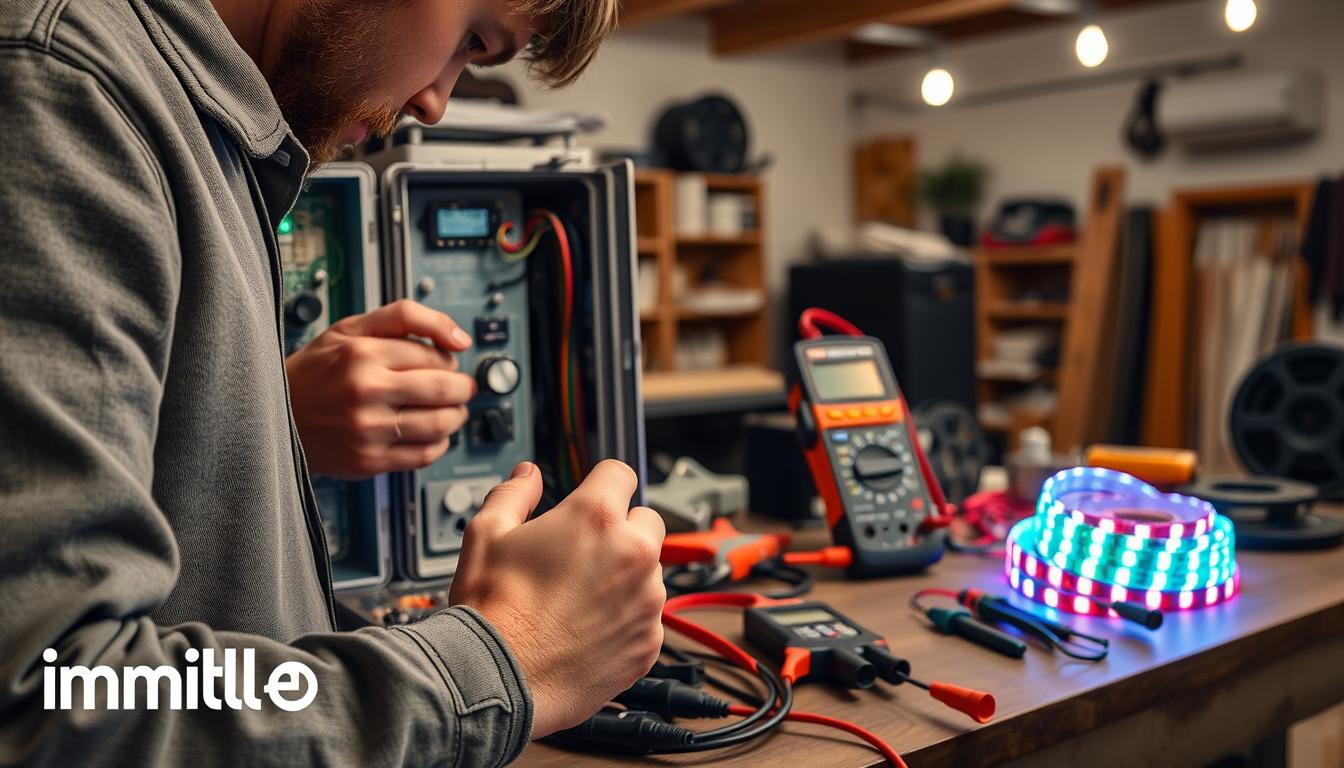
We believe that your lighting should always be a source of joy, not a technical headache. Even with the best planning, you might occasionally encounter minor issues like flickering or color inconsistencies in your dimmable LED tape. If you find yourself facing a technical challenge, you can explore these common issues and their solutions to get back on track quickly.
Flickering Lights
Flickering is often a sign of voltage drop, which happens when the power cannot reach the end of the strip effectively. To fix this, try shortening the power supply wires or switching to a thicker wire gauge to improve conductivity. You might also consider shortening the total length of the LED strip to ensure consistent power delivery.
No Power to the Strip
If your lights fail to turn on, start by checking all your physical connections. Ensure that the power supply is securely plugged in and that the polarity matches correctly at every junction. Double-check that your controller is receiving power and that no wires have come loose during the installation process.
Color Inconsistencies
Color shifts or inconsistencies in your dimmable LED tape are usually caused by signal degradation over long distances. If the colors at the end of the strip do not match the beginning, you may need to inject power at both ends of the run. Keeping your runs shorter or using high-quality connectors will help maintain uniform brightness and color accuracy throughout your entire lighting design.
Utilizing a Diagram for Installation
A well-designed wiring diagram acts as the ultimate roadmap for your lighting project. When you embark on a DIY LED strip installation, having a clear visual reference helps you avoid common mistakes and ensures every component functions perfectly.
Importance of Wiring Diagrams
Wiring diagrams are essential for complex lighting setups to ensure all components are connected to the correct terminals. Without a guide, it is easy to mix up positive and negative polarities, which can lead to damaged strips or flickering lights. Professional results are much easier to achieve when you can visualize the entire circuit before you begin connecting wires.
How to Read the Diagram
Reading a diagram might seem intimidating at first, but it is quite simple once you understand the basics. Most diagrams use standard symbols to represent power supplies, controllers, and LED strips. Pay close attention to color-coded lines, which typically indicate the specific wire colors you should match during your assembly.
Always verify that your power supply voltage matches the requirements of your LED strips. If you are looking for ways to make this process even smoother, you can use a streamlined LED controller to simplify your setup. This approach reduces the number of manual connections needed, making your project much more efficient.
Example Wiring Diagram
In a standard setup, the power supply connects directly to the controller, which then distributes power to the LED strips. You will see the positive (+) and negative (-) terminals clearly marked on both the controller and the strip ends. By following this layout, you ensure a stable flow of electricity throughout your entire DIY LED strip installation.
If you are working with RGB or RGB+CCT strips, the diagram will show additional channels for color control. Simply match the labeled pins on your controller to the corresponding pads on the strip. Taking your time to cross-reference your physical components with the diagram will guarantee a safe and beautiful lighting display.
Maintenance Tips for LED Strip Lights
We believe that great lighting should last, which is why we recommend these simple maintenance habits for your LED strip lighting. Taking a few minutes to care for your system ensures it continues to shine brightly for years to come. These proactive steps help protect your investment while keeping your home looking its best.
Regular Cleaning Procedures
Dust and debris can accumulate on your strips over time, which may slightly dim the light output. We suggest using a soft, dry microfiber cloth to gently wipe the surface of the strips every few months. Avoid using harsh chemicals or wet cleaners, as these can damage the delicate electronic components.
Inspecting Connections and Wires
Periodically checking your setup is a smart way to prevent future issues. Ensure that all connectors remain tight and that no wires show signs of fraying or heat damage. If you notice any loose connections, simply reseat them to maintain a stable power flow throughout your LED strip lighting installation.
How to Extend Lifespan
You can significantly extend the life of your lights by ensuring they have proper ventilation and are not overloaded. Many of our products come with a 3-year or 5-year warranty, reflecting our commitment to quality and long-term reliability. By following these simple care routines, you maximize the value of your purchase and enjoy consistent performance.
| Maintenance Task | Frequency | Primary Benefit |
|---|---|---|
| Surface Dusting | Every 3 Months | Maintains Brightness |
| Connection Check | Every 6 Months | Prevents Flickering |
| Wire Inspection | Annually | Ensures Safety |
| Warranty Review | Annually | Protects Investment |
Where to Buy Quality LED Strip Lights
Finding the right components for your lighting project transforms any space into a vibrant environment. We believe that quality hardware makes all the difference in achieving a professional finish. You deserve reliable products that stand the test of time.
Top Industry Choices
Selecting the best LED strip brands ensures your installation remains durable and bright. Many homeowners prefer high-performance options that offer consistent color accuracy and long-lasting circuitry. Investing in reputable manufacturers prevents common issues like flickering or premature dimming.
Customizing Your Atmosphere
Our team specializes in providing versatile color changing LED strips that adapt to your unique lifestyle. You can explore our convenient home lighting solutions to see how simple automation enhances your daily routine. We focus on innovation to make your smart home setup both efficient and enjoyable.
Direct Support and Quality Assurance
IMLT LED stands as a leading manufacturer dedicated to your satisfaction. We provide high-quality solutions tailored to your specific design needs. Reach out to us at [email protected] or contact our team via WhatsApp at 0086 185 8848 3178 to discuss your upcoming project. We look forward to helping you illuminate your world with precision and style.