
Navigating the modern market for home illumination can feel overwhelming. With so many options available, we want to help you find the perfect solution for your unique space. Whether you are upgrading a business or enhancing your home, choosing the right product makes all the difference.
We often hear customers ask which is better LED strip lights or rope lights for their specific projects. By comparing these two popular choices, we provide the clarity you need to make an informed decision. Our goal is to simplify the process so you can enjoy a bright, beautiful environment without the stress.
Innovation should be accessible and easy to implement. We are here to guide you through the technical details, ensuring your final selection fits your vision perfectly. Let us explore the differences together to find the ideal match for your needs.
Key Takeaways
- Understand the fundamental differences between flexible illumination technologies.
- Identify which product offers the best brightness for your specific application.
- Learn how to choose between energy efficiency and aesthetic versatility.
- Discover simple installation tips for both types of hardware.
- Gain confidence in selecting the right solution for your home or business.
Introduction to LED Strip Lights and Rope Lights
To make your space shine, we must first look at the fundamental differences between LED strip lights and rope lights. Selecting the right technology ensures your project looks professional and functions exactly as you intended.
Definition of LED Strip Lights
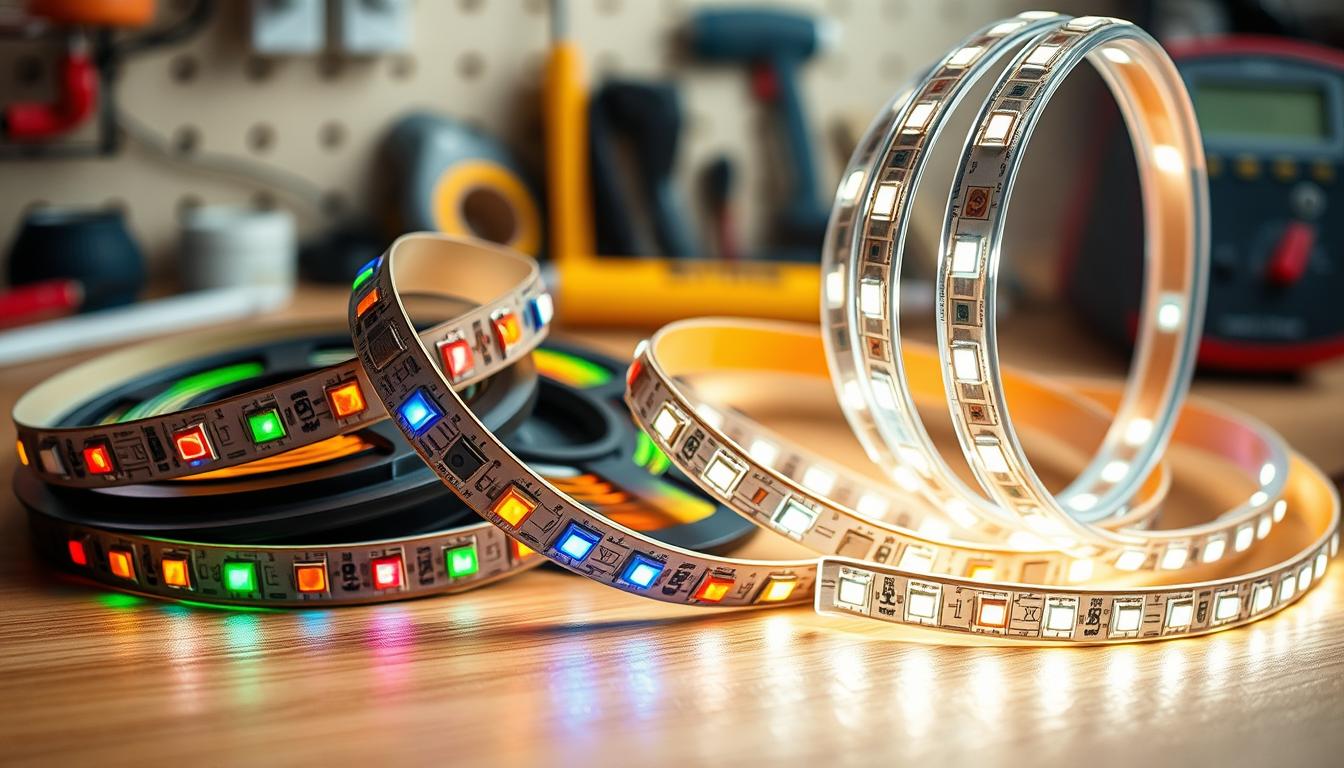
LED strip lights are modern, highly versatile lighting solutions. They consist of a flat, flexible circuit board populated with surface-mounted light-emitting diodes.
Because of their low-profile design, you can easily mount them under cabinets, along stairs, or behind televisions. Their adhesive backing makes installation a breeze for almost any DIY enthusiast.
Definition of Rope Lights
Rope lights feature a different construction style, utilizing a long, cylindrical plastic or epoxy tube. Inside this protective casing, small bulbs are spaced evenly to create a continuous, twinkling glow.
This design provides a robust, all-weather housing for the light source. They are often chosen for their ability to withstand the elements while providing a soft, diffused ambiance.
Overview of Common Uses
Understanding the specific strengths of each product helps you decide where they fit best. LED strips excel in task lighting and precise architectural accents where a clean, bright line is needed.
In contrast, rope lights are the go-to choice for decorative holiday displays or wrapping around outdoor pillars. Recognizing these core differences between LED strip lights and rope lights will help you achieve the perfect atmosphere for your home or business.
Key Differences Between LED Strip Lights and Rope Lights
Navigating the comparison LED strip lights vs rope lights helps you make a smarter, more efficient choice for your home. While both options provide beautiful illumination, they serve very different purposes depending on your specific design goals.
Construction and Flexibility
The physical build is one of the most notable differences between LED strip lights and rope lights. LED strips feature a flat, thin circuit board that is perfect for mounting in tight, hidden channels or under cabinets.
In contrast, rope lights are encased in a thick, flexible plastic tube. This design makes them much more durable for outdoor use, though they are bulkier and harder to hide in slim architectural gaps.
Brightness and Lumens
When looking at LED strip lights advantages vs rope lights, the light output is a major factor. LED strips typically offer a focused 120-degree beam angle, which provides intense, directional light that is ideal for task lighting.
Rope lights provide a 360-degree viewing angle, creating a soft, ambient glow that radiates in all directions. This makes them better for decorative accents rather than illuminating a workspace.
“Lighting is the secret ingredient that transforms a house into a home, and choosing the right tool for the job is the first step toward brilliance.”
Power Consumption
Both technologies are energy-efficient, but they operate with different levels of intensity. LED strips are generally more efficient because they direct light exactly where you need it, reducing wasted energy.
Rope lights may consume slightly more power to achieve the same visual impact due to their omnidirectional nature. Below is a quick summary to help you decide which option fits your needs.
| Feature | LED Strip Lights | Rope Lights |
|---|---|---|
| Beam Angle | 120 Degrees | 360 Degrees |
| Profile | Slim/Flat | Round/Bulky |
| Best Use | Task Lighting | Ambient/Decorative |
| Flexibility | High (Bendable) | Moderate (Tubular) |
Installation Process: LED Strip Lights vs Rope Lights
We believe that upgrading your space with modern lighting should never feel like a complicated chore. Whether you are a seasoned DIY enthusiast or a first-time decorator, the way a product mounts to your walls or furniture matters. Understanding the setup process is exactly why choose LED strip lights instead of rope lights for many modern home projects.
Installation Requirements for LED Strip Lights
LED strip lights are designed with the user in mind, prioritizing simplicity and speed. Most models come equipped with a high-quality 3M adhesive backing that allows for a quick “stick-and-place” application.
You simply peel the protective liner and press the strip firmly onto any clean, flat surface. This method eliminates the need for complex tools or drilling, making it an ideal solution for under-cabinet lighting or accenting shelves.
Installation Requirements for Rope Lights
Rope lights typically require a more mechanical approach to installation. Because they are heavier and more rigid, they often need plastic mounting clips, tracks, or specialized channels to stay in place.
You must measure your space carefully and screw these mounting brackets into your wall or ceiling before snapping the rope light into them. This process takes more time and may leave small holes in your surfaces, which is a factor to keep in mind for renters.
Ease of Use
When comparing the two, the flexibility of LED strips offers a clear advantage for most indoor applications. If you are wondering why choose LED strip lights instead of rope lights, consider the time saved during the setup phase.
The adhesive backing provides a seamless, low-profile look that blends perfectly with your decor. While rope lights are durable, their bulkier nature makes them better suited for permanent outdoor installations where heavy-duty mounting is required.
| Feature | LED Strip Lights | Rope Lights |
|---|---|---|
| Mounting Method | 3M Adhesive | Clips or Tracks |
| Tool Requirement | None | Drill and Screws |
| Surface Impact | Minimal | Moderate |
| Setup Time | Very Fast | Moderate |
Versatility in Applications
Choosing the right lighting solution depends heavily on how you plan to use your space. While both options offer unique ways to brighten your home, the benefits of LED strip lights over rope lights become clear when you prioritize precision and clarity. We are here to help you navigate these choices so you can achieve the perfect atmosphere with minimal effort.
Indoor and Outdoor Use
Rope lights are fantastic for creating a festive, 360-degree glow that wraps beautifully around trees or garden pillars. Their flexible, tube-like structure makes them ideal for decorative outdoor shapes where a soft, diffused light is desired. However, if you need targeted illumination for a workspace or a modern kitchen, LED strips offer superior directional control.
Decorative vs Functional Lighting
When you want to set a mood, rope lights provide a gentle, ambient glow that is perfect for parties or holiday displays. In contrast, the primary advantage of LED strips is their ability to provide high-quality, functional light. Whether you are highlighting a bookshelf or brightening a dark countertop, these strips deliver the crisp output required for daily tasks. To manage these settings effectively, you should get the right strip light remote for your to ensure total control.
Specific Use Cases
The benefits of LED strip lights over rope lights are most apparent in areas requiring high visibility. Kitchens, home offices, and display cases benefit immensely from the clean, focused light that strips provide. By choosing the right tool, you ensure that your creative vision is supported by efficient and reliable technology.
| Application Type | Rope Lights | LED Strip Lights |
|---|---|---|
| Decorative/Festive | Excellent | Good |
| Task/Functional | Limited | Excellent |
| Precision Lighting | Low | High |
| Outdoor Wrapping | High | Moderate |
Aesthetic Appeal: Design Considerations
Lighting is the secret ingredient to creating an atmosphere that feels both welcoming and modern. When you plan your home decor, the tools you choose define the final look and feel of your space. Understanding the LED strip lights advantages vs rope lights helps you make a choice that aligns with your creative vision.
Color Range and Effects
Modern lighting is no longer just about turning a switch on or off. LED strips offer advanced features like RGB+CCT color changing, which allows you to shift from warm white to cool daylight in seconds. You can even sync your lights with music to create a dynamic environment for parties or relaxing evenings.
In contrast, rope lights typically offer a static glow. While they provide a classic look, they lack the high-tech customization that makes LED strips a favorite for modern interior design. This flexibility is one of the primary LED strip lights advantages vs rope lights for those who love to change their room’s mood frequently.
Diffusion and Light Quality
The way light interacts with your room depends heavily on diffusion. LED strips often come with silicone covers or aluminum channels that create a smooth, seamless line of light. This prevents the “dotted” look that can sometimes distract from a clean, minimalist aesthetic.
Rope lights are encased in thick plastic tubing, which naturally diffuses the light but can also make it appear dimmer. If you want a sharp, professional finish, LED strips provide a superior quality of light. They are perfect for highlighting architectural features or under-cabinet areas where precision matters.
Design Fit for Specific Themes
Choosing the right lighting depends on the theme you want to achieve. For a sleek, contemporary home, LED strips are the clear winner due to their low profile and high output. They disappear into your decor until you turn them on, revealing a vibrant glow.
Rope lights often fit better in traditional or rustic settings where a softer, more diffused glow is desired. When evaluating LED strip lights advantages vs rope lights, consider how the fixture itself looks when it is turned off. The following table summarizes these key design differences:
| Feature | LED Strip Lights | Rope Lights |
|---|---|---|
| Color Customization | High (RGB+CCT) | Low (Static) |
| Light Profile | Slim and Discreet | Bulky and Visible |
| Dynamic Effects | Music Sync/Smart Control | None |
| Best Aesthetic | Modern/Minimalist | Traditional/Decorative |
Cost Comparison: LED Strip Lights and Rope Lights

We believe that your lighting choices should balance immediate affordability with lasting performance. When you conduct a comparison LED strip lights vs rope lights, it becomes clear that the cheapest option is not always the most economical over time.
Initial Investment
Rope lights are often the go-to choice for those seeking a low entry price. They are simple to manufacture and typically cost less at the checkout counter.
However, premium LED strips represent a higher upfront investment. This cost reflects the advanced technology and superior materials used to ensure consistent performance and color accuracy.
Long-Term Energy Costs
Energy efficiency is where the true value of your lighting system emerges. While rope lights may seem inexpensive, they often consume more power to produce the same amount of light as modern LED strips.
By choosing high-efficiency options, you reduce your monthly utility bills significantly. You can further optimize your setup by using a streamlined LED controller to simplify your and ensure you are only using power when necessary.
Maintenance Considerations
Durability plays a massive role in your total cost of ownership. Rope lights are prone to heat buildup, which can degrade the internal components faster than expected.
In contrast, high-quality LED strips are designed for longevity. You will spend less time and money on replacements, making them a smarter choice for your home.
| Feature | Rope Lights | LED Strip Lights |
|---|---|---|
| Initial Cost | Low | Moderate to High |
| Energy Usage | Higher | Very Low |
| Lifespan | Short | Long |
Ultimately, our goal is to help you find a solution that respects your budget while delivering the high-performance results you deserve. Investing in quality today prevents the frustration of frequent repairs tomorrow.
Lifespan and Durability Analysis
We believe that your lighting choices should provide reliable performance for many years to come. When you evaluate why choose LED strip lights instead of rope lights, the ability of the product to withstand daily wear is essential. Our goal is to help you select solutions that remain bright and functional without constant replacement.
Lifespan of LED Strip Lights
Modern LED strips are engineered for longevity, often lasting between 30,000 and 50,000 hours of use. This impressive lifespan means you can enjoy consistent illumination for over a decade with standard daily operation. You can learn more about these benefits in our comprehensive guide on lighting comparisons.
Lifespan of Rope Lights
Rope lights typically offer a shorter functional life compared to high-quality strips. The plastic tubing used in these products is prone to yellowing and cracking when exposed to direct sunlight over extended periods. This degradation often leads to a loss of clarity and potential failure of the internal wiring, which is a primary reason why choose LED strip lights instead of rope lights for long-term projects.
Factors Affecting Durability
Several environmental factors influence how long your lighting will last. Heat management is the most critical element, as excessive temperatures can shorten the life of electronic components. For industrial or heavy-duty needs, you might also explore the robust performance of LED lighting towers to see how professional-grade gear handles extreme conditions.
| Feature | LED Strip Lights | Rope Lights |
|---|---|---|
| Average Lifespan | 30,000 – 50,000 Hours | 10,000 – 20,000 Hours |
| UV Resistance | High (with silicone coating) | Low (prone to yellowing) |
| Structural Integrity | Flexible and robust | Rigid over time |
| Maintenance Needs | Minimal | Frequent checks required |
Safety Considerations for Both Lighting Options
Creating a beautiful atmosphere should never come at the expense of your peace of mind. We prioritize your security by providing clear guidance on how to install and maintain your lighting systems effectively. Whether you are working with flexible rope lights or versatile LED strips, following professional standards ensures your space remains both bright and secure.
Overheating Risks
Even though LED technology is highly efficient, it still generates heat that must be managed properly. Proper ventilation is essential to prevent heat buildup, which can shorten the lifespan of your components. We recommend mounting your lights on surfaces that allow for adequate airflow, especially when using high-density strips.
Avoid wrapping or covering your lights with flammable materials. If you notice any discoloration or a burning smell, disconnect the power immediately. Safe installation involves keeping your lighting away from insulation or enclosed spaces where heat cannot escape.
Electrical Safety Tips
Your electrical setup is the backbone of a reliable lighting system. Always verify that your power supply matches the voltage requirements of your lights to prevent short circuits. We suggest using surge protectors to shield your equipment from unexpected power spikes.
Never exceed the maximum load capacity recommended by the manufacturer. Connecting too many strands in a single series can lead to dangerous overheating of the wiring. Always inspect your cables for any signs of fraying or damage before installation to ensure a smooth and safe experience.
Waterproof Ratings
When you plan to use lighting in outdoor environments, understanding IP ratings is vital. The Ingress Protection (IP) rating tells you exactly how well your lights resist dust and moisture. Always verify the IP rating of your lighting products to ensure they are suitable for your specific outdoor environment.
For example, an IP65 rating offers protection against water jets, while an IP68 rating allows for full submersion. Choosing the right level of protection prevents corrosion and electrical failure. We are here to support you with professional advice that keeps your home or business safe while you enjoy the benefits of modern lighting.
| Safety Feature | LED Strip Lights | Rope Lights |
|---|---|---|
| Heat Dissipation | Requires aluminum profile | Self-contained casing |
| Electrical Load | Sensitive to voltage drops | Robust for long runs |
| Waterproofing | Varies by coating type | Typically fully sealed |
| Installation | Adhesive or clips | Mounting tracks required |
Environmental Impact: Energy Efficiency
When we look at modern lighting, energy efficiency stands out as a top priority for every conscious homeowner. We are passionate about helping you make choices that protect the environment while keeping your living space vibrant. By evaluating rope lights vs LED strip lights energy efficiency, we can identify the smartest path toward a sustainable home.
Energy Consumption of LED Strip Lights
Modern LED strip lights are designed to provide maximum brightness with minimal power draw. Because they utilize advanced semiconductor technology, they convert electricity into light far more effectively than traditional sources. This means you get brilliant illumination without the high energy costs typically associated with older lighting systems.
Energy Consumption of Rope Lights
Traditional rope lights often rely on older incandescent bulbs, which generate significant heat as a byproduct of light production. This wasted energy makes them less ideal for those looking to lower their utility bills. While newer LED-based rope lights exist, the structural design of standard LED strips remains superior in terms of overall energy conservation.
Eco-Friendly Options Available
We encourage you to look for smart lighting solutions that offer dimming capabilities and scheduling features. These tools allow you to reduce power usage even further by ensuring lights are only active when needed. When considering rope lights vs LED strip lights energy efficiency, choosing high-quality LED strips with smart controllers is the most effective way to minimize your carbon footprint.
| Lighting Type | Energy Efficiency | Heat Output | Lifespan |
|---|---|---|---|
| Standard LED Strips | High | Very Low | Long |
| Incandescent Rope Lights | Low | High | Short |
| LED Rope Lights | Medium | Low | Moderate |
User Experience and Customer Reviews
Real-world performance often tells a different story than technical specifications alone. We listen closely to our community to ensure we are always offering the most innovative and user-friendly lighting solutions available. By focusing on these positive experiences, we continue to refine our offerings to make your life easier and your home more beautiful.
Popular Brands of LED Strip Lights
When it comes to modern lighting, several brands stand out for their reliability and smart features. Philips Hue remains a top choice for those seeking seamless integration with existing smart home ecosystems. Govee has also gained massive popularity by offering vibrant color options and intuitive mobile app controls at a competitive price point.
Another notable player is LIFX, which provides high-quality light output without requiring a separate hub. These brands consistently rank high because they prioritize the user experience, making installation and daily operation feel effortless.
Popular Brands of Rope Lights
Rope lights are often favored for traditional decorative projects where a steady, diffused glow is required. Brands like HitLights and Novelty Lights are frequently cited for their durability in outdoor settings. While they offer a more classic aesthetic, they remain a staple for holiday displays and architectural accent lighting.
What Customers Are Saying
Customer feedback consistently highlights the convenience and flexibility that LED strips bring to modern living spaces. Many users emphasize the benefits of LED strip lights over rope lights, particularly regarding smart home compatibility and ease of customization. People love how they can change the mood of a room with a simple tap on their smartphone.
The following table summarizes why users often prefer one technology over the other based on common feedback trends:
| Feature | LED Strip Lights | Rope Lights |
|---|---|---|
| Smart Integration | High (App/Voice) | Low (Manual) |
| Installation | Very Easy (Adhesive) | Moderate (Clips) |
| Customization | High (Cut/Connect) | Low (Fixed Length) |
| User Satisfaction | Excellent | Good |
Ultimately, the benefits of LED strip lights over rope lights are clear when you prioritize modern functionality. Our community values the ability to automate their environment, which is why we remain committed to pushing the boundaries of smart lighting technology.
Conclusion: Choosing the Right Option
Transforming your living space requires a clear vision of your goals and the specific atmosphere you want to create. Deciding between LED Strip Lights Vs Rope Lights often comes down to whether you prioritize sharp, modern precision or a softer, more traditional glow.
Key Decision Factors
Your choice depends on your project requirements and personal style. We find that many homeowners ask which is better LED strip lights or rope lights when planning their next renovation. Consider the architectural layout of your home and the specific mood you wish to achieve with your remote-control LED lights.
Final Recommendations
We believe the best lighting option LED strip lights or rope lights is the one that integrates seamlessly into your daily routine. If you value smart home compatibility and vibrant color control, modern strips offer unmatched flexibility. For those seeking a classic, diffused look for outdoor pathways, rope options remain a reliable choice.
Connect With Our Team
Our experts are ready to help you navigate these choices to ensure your home shines exactly as you imagined. Visit www.imltled.com to explore our latest inventory. You can also email us at [email protected] or send a message via WhatsApp at 0086 185 8848 3178 for personalized guidance on your next project.