
Are you tired of flickering lights and high energy bills? We are here to help you navigate the transition from outdated lighting to modern, efficient LED lighting solutions. Upgrading your space is a smart move that saves money and improves your environment.
Choosing to convert fluorescent tubes to LEDs is an investment in a brighter, more sustainable future for your home or business. Our team provides professional guidance designed to simplify your life and reduce power consumption. We believe that making the switch should be easy and stress-free for everyone.
In this guide, we explore the primary methods for upgrading your fixtures. You will gain the knowledge needed to make an informed decision that fits your specific needs. Let us help you illuminate your world with innovative technology that works for you.
Key Takeaways
- Upgrading to modern lighting significantly lowers your monthly energy costs.
- Professional LED solutions offer a longer lifespan compared to traditional options.
- We simplify the transition process to ensure a seamless installation experience.
- Improved light quality creates a more comfortable and productive atmosphere.
- Investing in efficient technology supports a sustainable and eco-friendly future.
Understanding the Benefits of Switching to LED Lighting
Making the switch to LED lighting is a simple yet powerful decision that transforms how you experience your environment. As the fluorescent phase-out continues to gain momentum across Europe, many property owners are looking for reliable alternatives. We are here to help you navigate this transition with confidence and ease.
Energy Efficiency and Cost Savings
One of the primary reasons to upgrade is the immediate improvement in energy efficiency. LED tubes consume significantly less electricity than their fluorescent counterparts while providing the same, if not better, illumination. This reduction in power consumption translates directly into lower monthly utility bills for your home or business.
By investing in modern LED technology, you are choosing a solution that pays for itself over time. You will notice that your lighting system becomes a tool for saving money rather than a constant drain on your budget.
Environmental Impact and Sustainability
We prioritize sustainable lighting solutions that protect both your health and the planet. Traditional fluorescent lamps contain toxic mercury, which poses significant risks if a bulb accidentally breaks in your workspace or home. Switching to mercury-free lighting eliminates this hazard entirely, ensuring a safer atmosphere for everyone.
Furthermore, LEDs are built to last, which reduces the amount of electronic waste sent to landfills. Choosing these components is a responsible step toward a greener future.
Improved Light Quality and Longevity
Beyond safety and savings, you will enjoy a superior visual experience. LED tubes provide consistent, flicker-free light that reduces eye strain and enhances productivity. These lights also offer a much longer lifespan, meaning you spend less time on maintenance and replacements.
| Feature | Fluorescent Tubes | LED Tubes |
|---|---|---|
| Energy Usage | High | Low |
| Lifespan | Short | Long |
| Mercury Content | Yes | No |
| Light Quality | Variable | Consistent |
We are committed to providing you with lighting that is as reliable as it is efficient. By upgrading today, you ensure that your space remains bright, safe, and modern for years to come.
Assessing Your Current Fluorescent Fixture Setup
A successful transition to modern lighting begins with a clear understanding of your existing hardware. Whether you are upgrading a standard LED troffer or a simple linear strip, taking a moment to inspect your current fixtures is a smart move. This preparation ensures that your new components fit perfectly and helps you avoid common installation headaches.
Identifying Ballast Types
The ballast is the heart of your fluorescent fixture, regulating the current that flows to the tubes. You must determine if your fixture uses a magnetic or electronic ballast before choosing your replacement tubes. Electronic ballasts are common in newer systems, while older setups often rely on heavier magnetic versions.
Knowing your ballast type is vital because it dictates whether you can use a simple plug-and-play solution or if you need to bypass the wiring entirely. If you are unsure, check the label on the ballast housing for specific model numbers or compatibility ratings. This small detail makes a huge difference in the long-term performance of your new lighting.
Checking Tube Lengths and Pin Configurations
Standardization is your best friend when upgrading your lighting system. Most common T8 tubes feature a 1-inch diameter and a G13 medium bi-pin base, which is the industry standard for many commercial spaces. However, always measure the physical length of your tubes to ensure the replacements match your existing LED troffer housing.
Take a close look at the pins on the ends of your tubes to confirm they match the socket type. If your pins are oriented differently or if the tube length is non-standard, you might need specialized adapters. Taking these measurements now guarantees a seamless transition and keeps your project on track for a professional finish.
Safety Precautions Before Starting the Conversion
When you decide to perform lighting maintenance, taking the right precautions is the first step toward a stress-free experience. We want to ensure your transition to LED technology is as safe as it is efficient. By following professional protocols, you can confidently handle the conversion process without unnecessary risks.
Turning Off Power at the Breaker
The most critical step in any electrical project is isolating the power source. You must always turn off the power at the main breaker before touching any wiring or components within your fixtures. Simply flipping the wall switch is not enough to guarantee your safety, as live current may still be present.
We recommend labeling the breaker clearly so that no one accidentally restores power while you are working. Taking this extra moment to secure your workspace provides peace of mind and prevents accidental shocks during your lighting maintenance tasks.
Using Proper Protective Gear
Equipping yourself with the right tools and safety gear is essential for a professional result. We suggest wearing insulated gloves and safety glasses to protect against debris or unexpected electrical contact. Keeping your work area clean and well-lit also helps you stay focused and organized throughout the installation.
| Safety Item | Purpose | Importance |
|---|---|---|
| Insulated Gloves | Prevent electrical shock | High |
| Safety Glasses | Protect eyes from dust | High |
| Voltage Tester | Verify power is off | Critical |
| Non-Slip Shoes | Maintain stability | Medium |
By adhering to these simple yet vital safety standards, you ensure that your project remains a positive experience. We are committed to helping you achieve a brighter, more efficient home or workspace through safe and reliable lighting maintenance practices.
Direct Replacement Options Using Plug and Play Tubes
We often hear from clients who want the benefits of LED technology without the hassle of rewiring their entire office. If you are looking for the simplest path to a modern lighting setup, a Type A LED tube is an excellent choice. This approach allows you to keep your current fixtures exactly where they are while enjoying the efficiency of modern diodes.
By choosing this LED retrofit method, you save significant time on labor costs. You simply remove the old fluorescent tube and snap the new LED version into the existing socket. It is a seamless transition that keeps your daily operations running smoothly without interruption.
How Type A Tubes Work with Existing Ballasts
A Type A tube is specifically engineered to communicate with your current fluorescent ballast. The internal driver inside the LED tube interprets the electrical signal from the ballast and converts it into the power needed for the LEDs. This clever design ensures that you do not need to bypass or remove any existing components.
Because the ballast remains in the circuit, the installation process is incredibly fast. You essentially treat the new tube like a standard light bulb replacement. This convenience makes it a favorite for businesses that need to upgrade large areas quickly.
Compatibility Testing and Limitations
While the plug-and-play nature of a Type A LED tube is highly attractive, you must verify compatibility first. Not every LED tube works with every ballast model. We strongly recommend checking the manufacturer’s compatibility list before purchasing your LED retrofit kits to ensure a perfect match.
Keep in mind that your existing ballast is still a mechanical component that will eventually fail. If the ballast is already old or showing signs of wear, it may cause the new LED tubes to flicker or fail prematurely. In such cases, the long-term maintenance costs might outweigh the initial ease of installation.
| Feature | Fluorescent Tube | Type A LED Tube |
|---|---|---|
| Installation Time | Standard | Very Fast |
| Rewiring Required | No | No |
| Ballast Dependency | High | High |
| Energy Savings | Baseline | Significant |
Bypassing the Ballast for Direct Wire LED Installation
We often find that removing the ballast entirely is the most efficient way to modernize older fluorescent setups. By choosing a ballast bypass, you eliminate the risk of future component failure and ensure your lighting system operates at peak performance. This method provides a clean, direct connection to your power source, which maximizes energy efficiency for your home or business.
Understanding Type B LED Tube Requirements
A Type B LED tube is designed to function by drawing power directly from the mains, effectively cutting out the middleman. Because these tubes do not rely on an external ballast, they are incredibly durable and require very little maintenance over their lifespan. You will need to ensure your fixture is properly rewired to accommodate this direct power flow.
“The transition to direct-wire technology is the single most effective step a facility manager can take to reduce long-term maintenance costs and improve lighting consistency.”
Tools Needed for Rewiring Fixtures
To complete your installation successfully, you should gather a few essential tools before starting. Having the right equipment makes the process simple and safe for any DIY enthusiast or professional technician. We recommend keeping the following items on hand to ensure a smooth transition to your new lighting setup.
| Tool Name | Primary Function | Safety Level |
|---|---|---|
| Voltage Tester | Verify power is off | Essential |
| Wire Strippers | Prepare electrical leads | High |
| Insulated Screwdriver | Secure socket connections | High |
| Wire Connectors | Join electrical wires | High |
Once you have these tools ready, you are well-prepared to handle the wiring process. We are here to support you in creating a more efficient and durable lighting system that serves your needs for years to come.
Hybrid Solutions for Maximum Flexibility
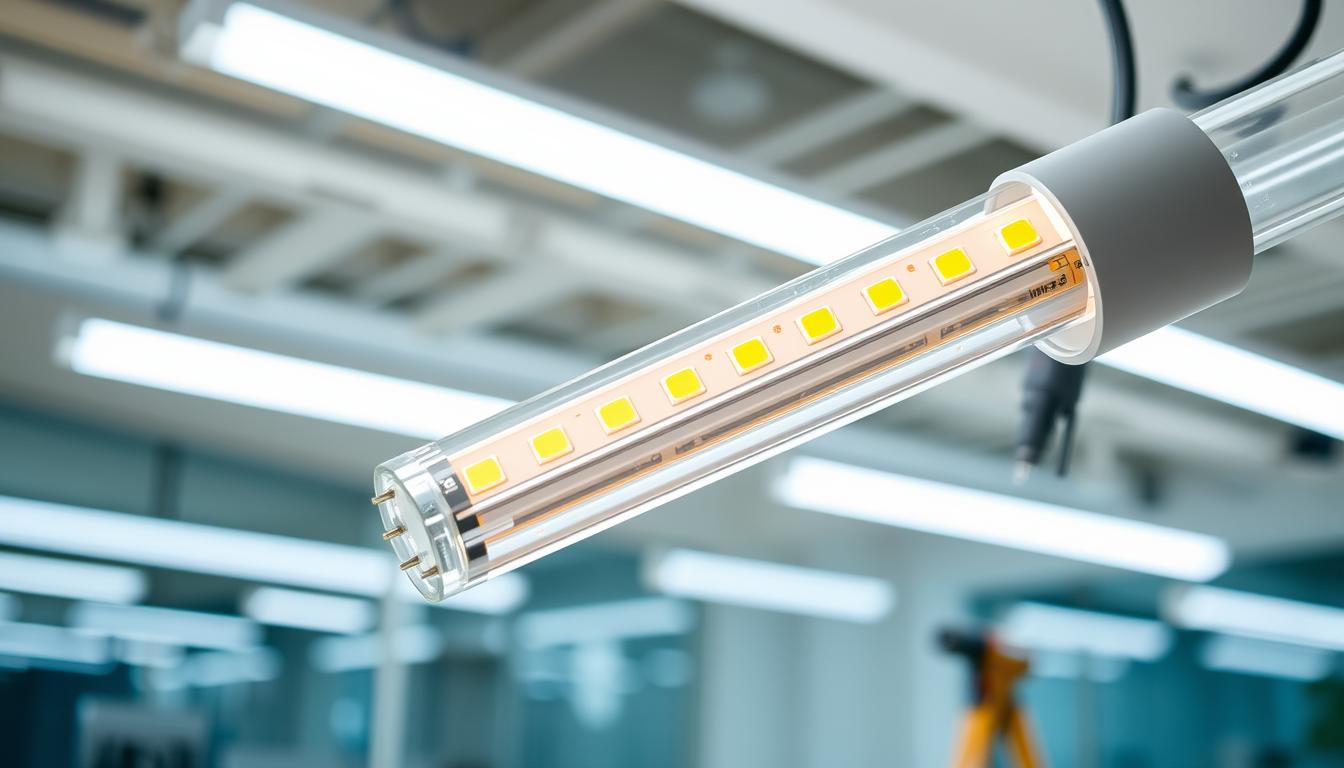
We believe that your lighting strategy should be as flexible as your business needs, which is why hybrid solutions are a game-changer. These innovative tubes function as both ballast-compatible and direct-wire options, providing you with the ultimate freedom during installation. By choosing this path, you can easily adapt to the unique requirements of your facility without needing multiple product types.
Benefits of Type A and B Compatible Tubes
The primary advantage of these tubes is their ability to work seamlessly with your existing infrastructure. You can start with a simple Type A LED tube installation that utilizes your current ballast for a quick upgrade. If the ballast fails later, you can simply bypass it to convert the fixture to a direct-wire setup.
This dual-functionality ensures that your energy efficiency remains high regardless of how your lighting system evolves. You no longer have to worry about compatibility issues or replacing entire fixtures prematurely. It is a smart, cost-effective way to maintain consistent lighting quality across your entire property.
When to Choose Hybrid Options for Commercial Spaces
Commercial environments often deal with complex maintenance schedules and varying fixture ages. Hybrid tubes are the ideal choice when you want to standardize your inventory while maintaining maximum installation flexibility. They allow your maintenance team to handle repairs on the fly without needing specialized parts for different fixture types.
We recommend these solutions for large-scale projects where long-term energy efficiency is a top priority. By investing in hybrid technology, you ensure that your facility is prepared for future upgrades while keeping your current operations running smoothly. It is a reliable, future-proof approach that simplifies your life and keeps your spaces bright.
Step by Step Guide to Convert Fluorescent Tubes to LEDs
Transforming your old fluorescent fixtures into modern, efficient LED systems is easier than you might think. We believe that with the right approach, anyone can achieve a professional-grade upgrade. Our goal is to make this transition as smooth and rewarding as possible for your home or business.
Removing the Old Fluorescent Components
The first phase of your project involves clearing out the outdated hardware. You must carefully remove the existing fluorescent tubes and set them aside for proper recycling. Once the tubes are out, locate the ballast hidden within the fixture housing and disconnect it from the power source.
Removing the ballast is a critical step to ensure your new system operates at peak performance. By clearing the housing, you create the necessary space for a clean and efficient setup. This preparation is essential for a successful Type B LED tube installation.
Wiring the Sockets for Direct Power
After clearing the housing, you will need to perform a ballast bypass to connect the sockets directly to the main power supply. This process eliminates the energy-wasting ballast entirely, allowing your new lights to draw power directly from the line. Always ensure that your wiring connections are tight and properly insulated to maintain safety standards.
We recommend double-checking your connections before closing the fixture cover. A secure connection prevents flickering and ensures that your lighting remains stable over time. Following these technical steps guarantees that your ballast bypass is performed correctly and safely.
Installing the New LED Tubes Securely
Once the wiring is complete, you are ready to insert your new Type B LED tube into the sockets. Gently rotate the tube until you feel it click into place, ensuring a firm connection. This final step completes your conversion, providing you with instant, high-quality illumination.
| Installation Phase | Primary Action | Key Benefit |
|---|---|---|
| Preparation | Remove ballast | Energy efficiency |
| Wiring | Direct power connection | Eliminates buzzing |
| Finalization | Secure tube seating | Reliable performance |
We are confident that this simple process will transform your space. By taking these steps, you are choosing a smarter and more sustainable way to light your environment. Enjoy the bright, clear results of your hard work.
Troubleshooting Common Conversion Issues
Even with careful planning, you might face minor hurdles during your LED retrofit project. We want your transition to modern lighting to be as smooth and stress-free as possible. If you notice unexpected behavior after installing your new tubes, do not worry, as most issues are easy to fix.
Effective lighting maintenance ensures your system remains consistent and reliable for years. By following these simple steps, you can keep your space bright and efficient without needing professional help for every small detail.
Addressing Flickering or Dimming Problems
Flickering often occurs when an LED tube is incompatible with the existing ballast during a Type A installation. If your lights blink, check if your specific ballast model is listed on the manufacturer’s compatibility chart. Sometimes, the ballast may simply be reaching the end of its natural life.
If the flickering persists, it is often better to bypass the ballast entirely. This transition to a direct-wire setup eliminates the middleman and provides a more stable power flow to your LEDs. This simple change often resolves dimming issues and improves overall energy performance.
Resolving Buzzing Sounds in Fixtures
A buzzing sound usually indicates that the ballast is struggling to communicate with the new LED tubes. This noise is a common sign that the electrical components are not perfectly matched. You can often stop this sound by ensuring all socket connections are tight and secure.
If the noise continues, it is a clear signal that your lighting maintenance routine should include a move toward ballast-bypass technology. Removing the ballast stops the vibration and creates a silent, high-quality lighting environment. Use the table below to quickly identify and solve these common installation challenges.
| Issue | Likely Cause | Recommended Solution |
|---|---|---|
| Flickering | Ballast Incompatibility | Check compatibility or bypass ballast |
| Buzzing | Loose Wiring | Tighten sockets and check connections |
| Dimming | Voltage Drop | Verify power source and wiring |
| No Light | Incorrect Installation | Re-seat tube and check breaker |
Selecting the Right LED Color Temperature and Brightness

We believe that your lighting should adapt to your lifestyle, which is why color temperature and brightness are so critical. Creating the perfect atmosphere in your home or office requires a thoughtful approach to how light interacts with your surroundings. By choosing the right settings, you can significantly improve both comfort and productivity.
Choosing Between Warm White and Daylight Options
Color temperature is measured in Kelvin (K) and dictates the “mood” of your space. Selecting the correct temperature ensures that your LED troffer installation feels natural and inviting.
- 3,000K (Warm White): This provides a soft, cozy glow that is perfect for living areas, bedrooms, or relaxation zones.
- 4,000K (Daylight/Cool White): This option offers a crisp, clean light that is ideal for offices, kitchens, and workspaces where focus is essential.
Understanding Lumens and Beam Angles
Brightness is measured in lumens rather than watts, which is a key distinction when moving to modern technology. A higher lumen count means a brighter light, but you must also consider the beam angle to ensure even coverage across your room.
Proper beam distribution prevents harsh shadows and ensures that your space is lit uniformly. If you are looking for maximum flexibility, we highly recommend integrating smart lighting controls into your setup. These systems allow you to adjust brightness levels and even color temperatures on the fly, ensuring your environment always matches your specific needs.
Professional Support and Quality LED Solutions
We believe that the foundation of any great lighting project lies in the quality of the components you choose. Our team provides professional LED lighting solutions that are built to last, ensuring you get the best value for your investment.
Why Quality Components Matter for Longevity
High-quality parts are essential for maintaining consistent lumen output over the entire life of your system. When you invest in superior hardware, you significantly extend the lifespan of your installation and reduce the need for frequent maintenance.
Reliable components prevent common failures that often plague cheaper alternatives. By prioritizing quality, you ensure that your space remains bright and inviting for years to come.
Contacting IMLT LED for Expert Guidance
If you need assistance with smart lighting controls or optimizing your current setup, we are just a message away. Our experts are ready to help you navigate the technical details of your transition.
Website Resources at www.imltled.com
Visit our website at www.imltled.com to explore our full range of products and technical guides. You will find helpful resources designed to make your upgrade process simple and efficient.
Reaching Out via WhatsApp at 0086 185 8848 3178
For immediate assistance, feel free to reach out via WhatsApp at 0086 185 8848 3178. We enjoy connecting with our clients to provide personalized advice for every project.
Direct Email Support at [email protected]
You can also send your questions directly to our support team at [email protected]. We are committed to providing dedicated support to ensure your lighting project is a complete success.
Regulatory Compliance and Standards in France
We prioritize your peace of mind by ensuring every lighting upgrade aligns with strict French and European safety protocols. Navigating the legal landscape of facility management can feel overwhelming, but we are here to simplify the process for you. By choosing sustainable lighting, you not only improve your space but also ensure your business remains fully compliant with current environmental mandates.
Meeting European Lighting Safety Standards
All our LED solutions are rigorously tested to meet the latest European safety standards. These regulations ensure that your new hardware is safe, energy-efficient, and built to last. Much like the global fluorescent phase-out trends seen in regions like California, France is moving toward higher performance requirements for all commercial and residential lighting.
When you upgrade your fixtures, you are investing in technology that respects both safety and performance. We focus on providing products that carry the necessary certifications to keep your facility up to date. Our team helps you navigate these requirements with ease and confidence, ensuring your transition is smooth and legally sound.
Disposal Requirements for Old Fluorescent Tubes
Properly managing the end-of-life cycle for your old lighting is a critical step in your sustainability journey. Old fluorescent tubes contain hazardous materials, which is why transitioning to mercury-free lighting is a vital part of our mission. We provide clear guidance on how to handle these components to protect our environment and comply with local waste management laws.
To ensure you handle the fluorescent phase-out correctly, consider these essential steps for responsible disposal:
- Never dispose of fluorescent tubes in standard trash bins.
- Use designated collection points for hazardous waste in your local French municipality.
- Partner with certified recycling services that specialize in mercury-free lighting recovery.
- Keep records of your disposal process to maintain full transparency for your facility audits.
By following these guidelines, you contribute to a cleaner future while maintaining sustainable lighting practices. We are dedicated to supporting your transition every step of the way, making compliance simple and stress-free.
Conclusion
Upgrading your home or office lighting is a simple way to boost efficiency and comfort. When you decide to Convert Fluorescent Tubes to LEDs, you take a major step toward a sustainable and cost-effective future.
Modern lighting technology offers more than just energy savings. You gain control over your environment by selecting the perfect LED color temperature to suit your specific activities. Whether you need bright light for focused work or a softer glow for relaxation, the right choice makes all the difference.
We invite you to embrace these innovative solutions today. Our team at IMLT LED remains ready to support your transition to high-quality, reliable lighting systems. Start your journey toward a brighter and more efficient space right now.