
When you start a new lighting project, you want everything to look perfect. One of the most important factors to consider is LED density, which refers to the number of light sources packed into every meter or foot of your strip.
Understanding this technical detail helps you achieve the exact brightness and visual flow you desire for your home or business. Higher counts typically result in a smoother, more uniform glow, while lower counts might create visible gaps between individual points of light.
We want to help you make informed decisions that simplify your installation process. By choosing the right LED density, you ensure your space looks professional and inviting without any guesswork.
Key Takeaways
- It measures the number of light chips per meter or foot.
- Higher counts provide a seamless, dot-free appearance.
- Lower counts are often more cost-effective for hidden applications.
- Total light output increases as you add more chips to the strip.
- Selecting the right option ensures your project meets your specific aesthetic goals.
Understanding LED Density
If you want to achieve professional lighting results, understanding LED density is your essential first step. We believe that demystifying technical jargon makes your design process much smoother and more enjoyable. By grasping these core concepts, you can confidently select the perfect lighting for any space.
Definition of LED Density
At its core, LED density refers to the quantity of individual LED chips mounted along a specific length of a strip. Typically, this is measured per meter or per foot. A higher count of diodes packed closely together creates a more seamless and uniform light output.
Importance in Lighting Applications
The density you choose directly impacts the final look of your installation. For subtle, indirect ambiance, a lower density might suffice. However, if you need bright, consistent task lighting, a higher LED pixel density is often the better choice to avoid visible “hot spots” or dark gaps.
Selecting the right product ensures your space looks polished and intentional. Whether you are highlighting architectural features or brightening a workspace, these LED panel specifications act as a guide for your success.
How It’s Measured
We measure this metric by counting the diodes within a fixed unit of length. Manufacturers provide these details to help you match the intensity to your specific project requirements. Reviewing these numbers allows you to predict how the light will behave once installed.
| Density Level | Chips per Meter | Best Application |
|---|---|---|
| Low Density | 30 LEDs/m | Decorative accent lighting |
| Standard Density | 60 LEDs/m | General room illumination |
| High Density | 120+ LEDs/m | Task lighting and seamless lines |
Understanding the relationship between LED pixel density and your desired outcome is key. By paying attention to these LED panel specifications, you ensure that your lighting setup remains both efficient and visually stunning.
Types of LED Strips
Finding the perfect balance between form and function starts with understanding the different types of LED strips available today. We provide a variety of options to ensure your creative vision comes to life with ease and efficiency. When planning your layout, remember that the physical format is just as important as considering the LED screen resolution or density requirements for your specific environment.
Flexible LED Strips
Flexible strips are the most popular choice for creative lighting projects. These strips feature a pliable circuit board that allows you to bend them around corners or wrap them along curved surfaces. They are perfect for:
- Under-cabinet lighting in kitchens
- Accent lighting behind televisions
- Decorative cove lighting in living rooms
Rigid LED Strips
When your project requires a straight, structured look, rigid LED bars are the ideal solution. These strips are mounted on sturdy aluminum channels, which provide excellent heat dissipation and a clean, professional finish. They are highly recommended for:
- Retail display cases
- Architectural wall washing
- Under-shelf task lighting
Specialized LED Strips
For unique industrial or high-performance needs, we offer specialized modules designed for specific tasks. These include waterproof variants for outdoor use or high-output versions for commercial signage. When selecting these, it is vital to match the hardware to your project’s LED screen resolution needs to ensure consistent light distribution and visual clarity.
Advantages of High LED Density
High LED density is the secret ingredient for achieving a professional, seamless glow in any room. When you upgrade your lighting setup, the benefits of high LED density become immediately clear through superior performance and visual appeal.
Brighter Illumination
By packing more diodes into a single strip, you naturally increase the total light output. This creates a vibrant and powerful source of illumination that can easily brighten even the darkest corners of your home or office. You will find that these strips provide a more consistent level of brightness across the entire length of the installation.
Enhanced Color Saturation
Higher density allows for a more concentrated blend of light, which significantly improves color depth. When you use RGB or tunable white strips, the colors appear richer and more accurate to the eye. This creates a more immersive experience, whether you are setting the mood for a movie night or highlighting architectural features.
Improved Dispersion of Light
One of the most common frustrations with standard strips is the visible “dotted” or “spotting” effect. High-density strips solve this by placing diodes closer together, which allows the light to blend perfectly before it hits a surface. This is essential for achieving high LED display quality in areas where the light source remains visible to the viewer. By eliminating dark spots, we help you create a polished, professional look that enhances the beauty of your interior design.
Considerations for Choosing LED Density
We believe that picking the right LED density should be a simple and rewarding experience for you. When planning your layout, we recommend carefully evaluating your specific goals to ensure the final result matches your vision. Understanding the technical requirements early on helps you avoid common pitfalls and keeps your project on track.
Application Needs
Your choice of density depends heavily on the intended use of the light. For task lighting, such as under-cabinet areas, a higher density provides a seamless, dot-free glow that is easy on the eyes. If you are looking for subtle accent lighting, a lower density might be perfectly sufficient to achieve the desired mood.
Installation Environment
The physical space where you install your lights plays a major role in your decision. High-density strips typically draw more power and generate more heat, which means you must prioritize proper thermal management. Always check the LED panel specifications to ensure your power supply can handle the load without overheating or failing prematurely.
Budget Constraints
We are here to help you balance your budget constraints with the performance you need. While high-density options offer superior light quality, they often come with a higher price tag for both the strips and the necessary drivers. We suggest focusing on the areas where high-quality light is most visible to maximize your investment effectively.
| Factor | Low Density | High Density |
|---|---|---|
| Heat Output | Minimal | Significant |
| Power Needs | Standard | Robust Drivers |
| Visual Effect | Visible Dots | Uniform Glow |
| Panel Specs | Basic LED panel specifications | Advanced LED panel specifications |
Common Uses of High-Density LED Strips
We see high-density LED strips transforming spaces, from cozy home lighting solutions to vibrant commercial displays. By utilizing a high-density LED display approach, you ensure that your architectural features are highlighted with consistent, professional light. Our goal is to help you achieve superior LED display quality in every project you undertake.
Home Lighting Solutions
In residential settings, these strips are the preferred choice for under-cabinet task lighting. Because the diodes are placed closer together, you get a seamless, dot-free glow that eliminates harsh shadows on your countertops. This creates a clean and modern aesthetic that elevates the overall feel of your kitchen or workspace.
Commercial Displays
Retailers rely on high-density strips to make products stand out on shelves. When you prioritize LED display quality, you ensure that colors appear vibrant and accurate to your customers. This level of precision is essential for creating an inviting atmosphere that encourages shoppers to engage with your merchandise.
Event Decor and Stage Lighting
For events and stage productions, a high-density LED display provides the uniform brightness needed for professional results. These strips offer the flexibility to wrap around complex structures while maintaining a consistent light output. Whether you are highlighting a stage edge or creating custom decor, you can trust these lights to deliver stunning visual impact every time.
Comparison of LED Densities
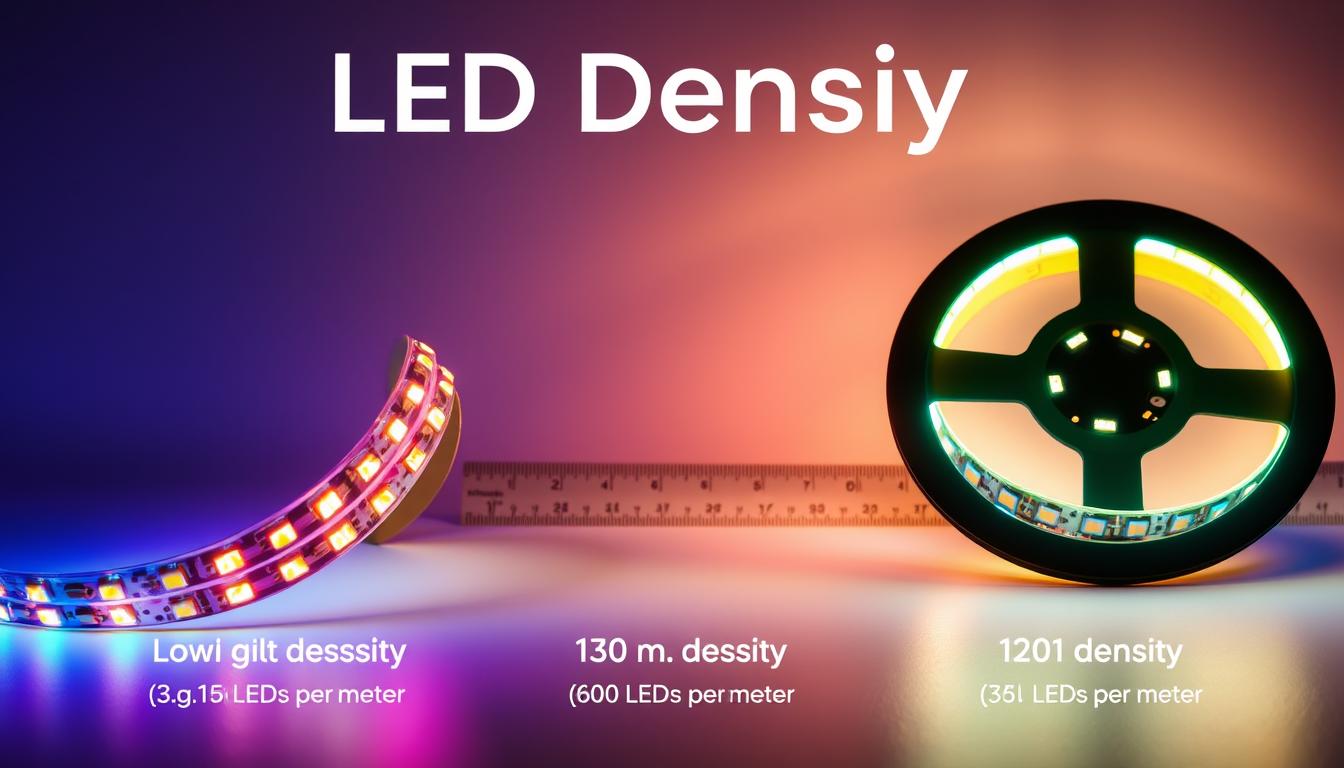
Choosing the right lighting setup starts with a clear LED density comparison. We want to ensure you achieve the perfect balance between brightness and efficiency without overspending on features you might not need.
Understanding what does LED density on an LED strip is the first step toward a successful installation. By matching the right product to your specific goals, you can transform any space into a professional-grade environment.
Low-Density vs. High-Density
The primary difference lies in the number of diodes per meter. Common configurations include 30 LEDs/m for basic decorative needs, 60 LEDs/m for standard efficiency, and 120+ LEDs/m for high-intensity output.
Low-density strips are cost-effective and perfect for subtle ambient glows. In contrast, high-density options provide a seamless, continuous line of light that eliminates visible spotting.
Applications Best Suited for Each Density Type
Selecting the correct LED Density depends entirely on your project requirements. For simple accent lighting in a living room, a lower density is often sufficient and helps keep your budget in check.
However, if you are designing a high-density LED display for a retail store or a professional workspace, you need the extra power of 120+ LEDs/m. These high-density strips ensure that your light is uniform, bright, and free from distracting dark gaps.
| Density Type | LEDs per Meter | Best Use Case |
|---|---|---|
| Low | 30 LEDs/m | Decorative/Accent |
| Standard | 60 LEDs/m | General Illumination |
| High | 120+ LEDs/m | Task Lighting/Displays |
We recommend evaluating your specific surface area before making a purchase. Whether you need a soft glow or a powerful beam, choosing the right density makes all the difference in your final result.
Maintenance of LED Density
We believe that a little routine maintenance goes a long way in preserving your lighting investment. By keeping your strips clean and ensuring they operate within safe parameters, you can significantly improve your LED display performance over time.
Cleaning Techniques
Dust and debris can accumulate on your strips, which may trap heat and dim your lights. We recommend using a soft, dry microfiber cloth to gently wipe the surface of the LEDs periodically.
If you notice stubborn grime, you can lightly dampen the cloth with a small amount of isopropyl alcohol. Always ensure the power is completely disconnected before you begin any cleaning process to keep yourself safe.
Troubleshooting Common Issues
High-density strips are powerful, but they also generate more heat than standard versions. If you notice your lights flickering or dimming unexpectedly, it is often a sign that the system is struggling with thermal management.
Check that your strips are mounted on a surface that allows for proper heat dissipation, such as an aluminum profile. Proper heat sinking is essential to maintain consistent LED display performance and prevent premature component failure.
If you encounter persistent issues, verify that all connections are secure and free from oxidation. We are always here to provide the support you need to keep your lights shining brightly and efficiently for years to come.
Design Tips for LED Strips
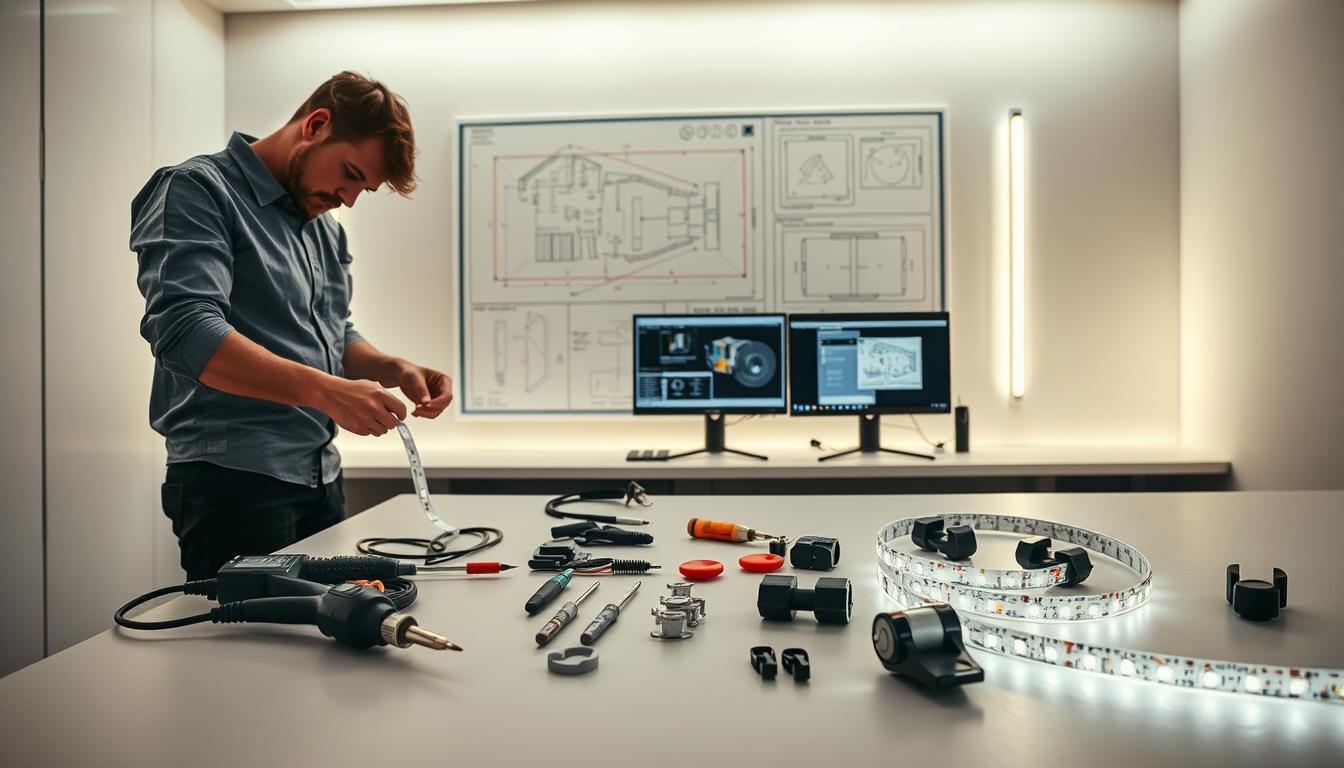
We believe that smart placement strategies are the secret to a professional lighting design that feels effortless. By focusing on how light interacts with your surfaces, you can turn a simple room into a sophisticated environment. Our goal is to help you achieve a clean, high-end look that highlights the best features of your space.
Placement Strategies
The most effective way to use LED strips is to hide the light source itself. By placing strips behind crown molding, under cabinets, or inside recessed coves, you create a soft, indirect glow that eliminates harsh glare. This technique ensures that the light washes over your walls or countertops rather than hitting your eyes directly.
Consider the angle of your installation to maximize coverage. Tilting the strip slightly toward the surface you want to illuminate can significantly improve the uniformity of the light. Always test your placement before committing to a permanent adhesive bond to ensure the effect meets your expectations.
Mounting Options
Choosing the right mounting hardware is just as important as where you place the lights. We highly recommend using aluminum channels for most projects. These channels provide a clean, finished look while acting as a heat sink to dissipate heat from high-density LED strips, which extends the lifespan of your diodes.
Beyond aluminum channels, you have several other options depending on your specific surface. Whether you are mounting to wood, metal, or drywall, selecting the correct profile ensures your installation remains secure for years to come.
| Mounting Method | Best Use Case | Key Benefit |
|---|---|---|
| Aluminum Channels | Under-cabinet & Coves | Superior heat dissipation |
| Adhesive Backing | Temporary or light use | Quick and easy setup |
| Mounting Clips | Long, straight runs | Secure, adjustable hold |
Trends in LED Technology
The world of lighting is evolving rapidly, bringing us closer to a future where brilliance meets efficiency. We are constantly exploring new ways to make your home feel more vibrant and welcoming through the latest advancements in LED technology.
By focusing on smarter design, we ensure that your lighting solutions remain both simple and highly effective. These improvements allow us to offer you products that are not only brighter but also more energy-efficient than ever before.
Innovations in LED Density
Recent breakthroughs have allowed for a significant increase in LED pixel density. This means that individual light points are now packed closer together, creating a seamless glow that eliminates harsh spots or dark gaps.
This level of precision is a game-changer for interior design. By achieving a more uniform light output, we can provide you with smooth, continuous illumination that enhances the aesthetic of any room in your home.
Future of LED Strips
Looking ahead, the potential for these lighting tools is truly limitless. We are seeing a shift toward higher LED screen resolution, which allows for more complex and dynamic lighting effects in both residential and commercial settings.
As LED technology continues to mature, we expect to see even more versatile options that adapt to your specific needs. Our goal is to keep you at the forefront of these trends, ensuring your space always feels modern, comfortable, and perfectly lit.
Customer Support for LED Products
Achieving the best LED display performance requires more than just high-quality hardware; it requires a dedicated partner who understands your vision. We are committed to helping you navigate the technical details of your lighting projects with ease and confidence.
Contacting IMLT LED
We believe that personalized assistance is the foundation of a successful installation. You can reach our expert team at IMLT LED via email at [email protected] or through WhatsApp at 0086 185 8848 3178.
Whether you need help selecting the right density for your specific space or require technical troubleshooting, we are always here to support you. Our team is ready to partner with you to ensure your lighting projects are a complete success.
Resources Available at IMLT
We invite you to visit our website at www.imltled.com to explore our full range of resources and guides. Understanding the nuances of your equipment, such as what does LED density on an LED strip, is essential for long-term satisfaction.
Our online library is designed to simplify your decision-making process. By providing clear, actionable information, we help you maintain optimal LED display performance throughout the lifespan of your lighting system. We are passionate about making your dream life shine brighter through innovative and simple solutions.
Learning More About LED Density
Selecting the right lighting setup transforms your environment into a vibrant space. We hope this guide clarifies the benefits of high LED density for your unique design goals. Understanding these technical details empowers you to make smart choices for every room.
You now possess the knowledge to perform a clear LED density comparison for your next installation. This skill ensures your projects achieve the perfect balance of brightness and efficiency. Modern LED technology continues to evolve, offering new ways to illuminate your world with precision.
Deepening Your Technical Knowledge
Explore our online library at IMLT to find detailed white papers and installation guides. These documents provide deeper insights into current industry standards. We keep our database current so you always have access to the latest lighting trends.
Staying Current with Industry Shifts
Sign up for our newsletter to receive updates on emerging lighting solutions. We share tips on how to integrate new hardware into your existing smart home systems. Reach out to our team at IMLT if you need personalized advice for your specific lighting layout.